

The Future of Work

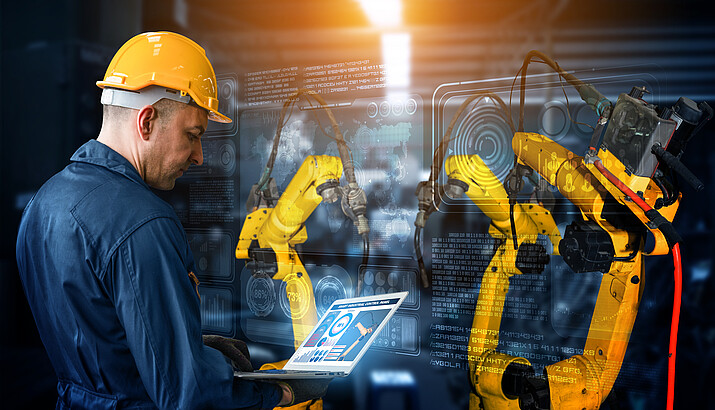
Mann steht vor einem Roboter
Foto: Adobe Stock

Shaping the Future of Work

Digitalization, demographic change, and new forms of work are fundamentally transforming the economy and society.

The Institute for Health, Aging, Work, and Technology explores how work can be designed to be healthy, productive, and people-centered.

Why This Topic Is Important

Work is changing faster than ever before: AI and automation are transforming jobs, skilled workers are becoming scarcer, employees are staying in the workforce longer, and new forms of work are emerging.
The challenge lies in reconciling technological innovation with human needs. Work is understood not only as an economic process, but also as a social space that influences health, motivation, and participation.

Our Areas of Expertise

Ergonomics: Analysis of working conditions, stressors, and competency requirements.

Social and Organizational Research: Design of modern work organization, leadership, and professional development.

Technology & Digitalization: Development and evaluation of data-driven assistance systems and AI applications.

The goal is to provide scientifically grounded support to companies and employees during transformation processes.

Work Prospects in Lusatia
As part of the PerspektiveArbeit Lausitz (PAL) project, the GAT is researching the skills employees need for modern production and Industry 4.0. AI-assisted systems, digital twins, and data-driven solutions can make work more efficient and healthier—but people remain the key factor for success.
Learn more
BASA Method
Using the BASA screening, the GAT analyzes psychological stress in the workplace and helps organizations identify risks early on, improve working conditions, and promote health and performance in a sustainable manner.
Learn more
Balancing Caregiving and Work
A growing issue in modern workforces is the balance between employment and caregiving responsibilities. In her doctoral dissertation, Dr. phil. Katja Knauthe examined organizational frameworks, workplace solutions, and policy options, and developed practical recommendations for companies and decision-makers.
Learn more
New Work Environments & Work 4.0
As part of the Saxony⁵ Transfer Network, the institute focuses on digital learning environments, ergonomic workplace design, and flexible and participatory work arrangements. A series of events on labor market and structural change, as well as a planned 360° panoramic view of a workplace of the future, bring these developments to life in a practical way.
Learn more