
Message details
Innovative Approaches to Mental Well-Being in Long-Term Care: A Look at the WELL CARE Symposium at the 23rd IAGG World Congress
From July 5 to 8, the 23rd IAGG World Congress on Gerontology took place in Amsterdam, with a focus on the EU-funded WELL CARE projects. Of particular note were two symposium sessions that addressed best practices and the impact of care policy on the well-being of caregivers in Europe.
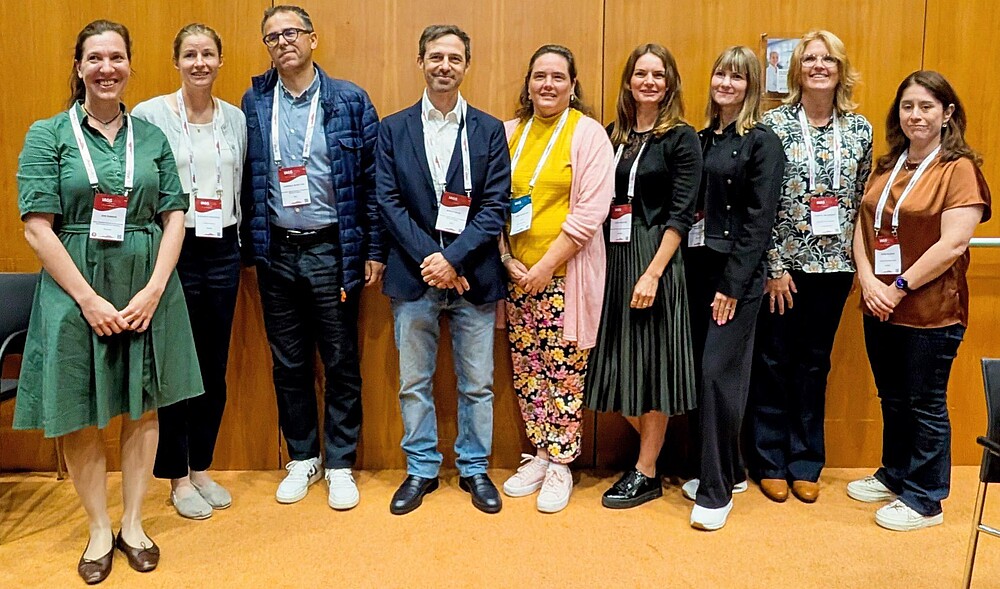
Symposium 1: Best Practices and Solutions for Enhancing Mental Well-Being
During the first symposium, experts from several European countries presented successful interventions and innovative approaches to support informal caregivers and professionals. Under the direction of Maria Nilsson and Marco Socci, the results of a systematic literature review and ten detailed case studies were presented, demonstrating the effectiveness of various practical measures.
Examples of best practices include:
- Sweden’s assertive community treatment teams (Elin-Sofie Forsgärde, Linnaeus University)
- Italy’s individualized care plan, which addresses the needs of family caregivers (Marco Socci)
- Slovenia’s training programs for family caregivers and the E-Qalin quality model (Ana Ramovš, Miriam Hurtado Monarres)
- Germany’s online counseling service “Pflegen & Leben” (Katja Knauthe, Zittau/Görlitz University of Applied Sciences)
A special focus was placed on participatory methods used to develop local solutions in collaboration with caregivers. The message: The mental well-being of caregivers is a fundamental right and a prerequisite for sustainable long-term care—support must be designed collaboratively.
More information, including the full reports and case studies, is available on the project website: https://wellcare-project.eu/
Symposium 2: The Impact of Nursing Policy on Well-Being
The second symposium focused on how the different care systems in five European countries influence the mental well-being of care workers. Chaired by Andreas Hoff, representatives from Sweden, Germany, Italy, the Netherlands, and Slovenia examined how sociopolitical conditions affect the stress levels of care workers.
All countries reported that they rely on a high proportion of informal caregivers as well as professional nursing staff, who are under increasing pressure. The findings show that the mental well-being of these caregivers is not a secondary consideration but a crucial prerequisite for the sustainability of long-term care. Caregivers have an independent right to support and well-being, which must be taken into account in their respective national policies.
The policy analyses and country profiles are summarized in a special report titled “Country Profiles,” which is also available on the project website: https://wellcare-project.eu/
The WELL CARE project emphasizes that strengthening the mental well-being of caregivers is an integral part of sustainable health care systems. Support must be active and participatory—only in this way can long-term care be made sustainable for the future.
2.Obergeschoss