

Message details
The future of Lusatia: Working together for gender-equitable change
Master's program in Management of Social Change commits to gender-equitable structural change at the 18th Future Forum on Rural Development
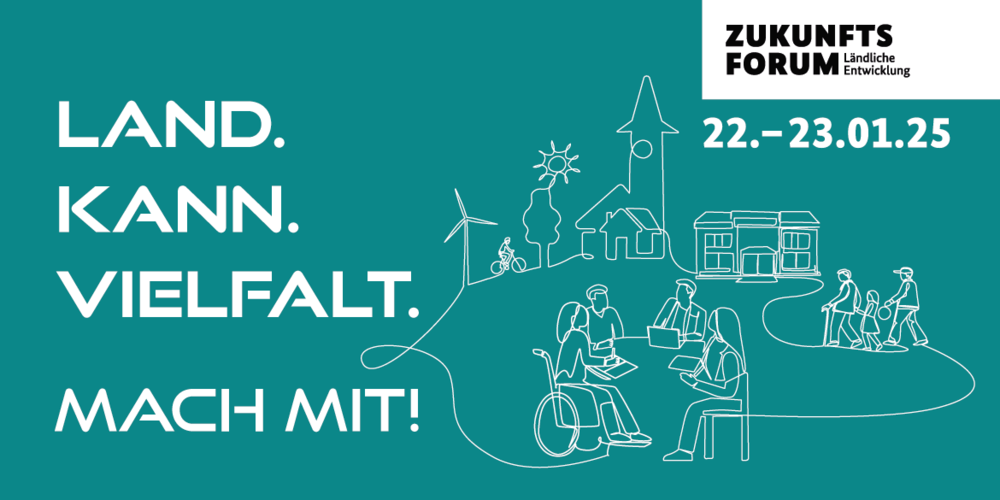
At the 18th Future Forum on Rural Development: LAND.KANN.VIELFALT – Mach mit! the Master's program in Social Change Management supported the expert forum "Strukturwandel in der Lausitz geschlechtergerecht gestalten" (Shaping structural change in Lusatia in a gender-equitable way). Associate Professor Julia Gabler traveled to Berlin with students to discuss with director Annette Dorothea Weber, Lisa Temesvári-Alamer from the Bündnis Gleichstellung Lausitz and Franziska Rauchut from the Bundesstiftung Gleichstellung how structural change processes can be made more equitable and what challenges characterize rural life in Lusatia.
The artistic film "Es kommt drauf an das Hoffen zu lernen" (It's Important to Learn to Hope) opens the expert forum and broadens the perspective from the coal industry job market to the realities of life in the places affected by devastation, the generations and communities facing additional challenges due to migration. Gender-blind measures of participation, workplace compensation and infrastructure development raise questions of equitable participation, informed data collection and political responsibility for making data-based decisions.
Annemarie Grünert, a student of the Master's program in Management of Social Change, highlights three points: without reproduction there can be no production, i.e. caregiving relationships and care are central to all genders and generations, even in industrial regions. A father-friendly work culture would be a necessary change of perspective in order to further develop gender-equitable structures in work organizations and emphasize the attractiveness of the region. At the same time, structural change creates uncertainties and new instabilities that are unavoidable. However, it also provides a window of opportunity to gather working examples and new perspectives and to correct structures.
Take a look at the TRAWOS brochure published in 2024 "10 Jahre Forschung zu Lebensweisen von Frauen in Strukturwandelregionen" (10 years of research into women's lifestyles in regions undergoing structural change)
Your contact person at Trawos
2. Obergeschoss