

Message details
Technological innovation as a socially embedded practice
TRAWOS member Leonie Liemich at the 17th Conference of the European Sociological Association (ESA) in Warsaw

TRAWOS researcher Leonie Liemich presented research on the emergence of technological innovation in rural regions undergoing transformation at the 17th Conference of the European Sociological Association (ESA) in Warsaw
The 17th Conference of the European Sociological Association took place in Warsaw from 25 to 28 August 2026. The international conference brought together more than 3,000 sociologists and researchers from related disciplines across more than 700 panels to discuss current social developments and challenges. As part of the ‘Science, Technology and Society’ panel on 27 August 2026, Leonie Liemich, MA, an associate researcher at TRAWOS – the Institute for Transformation, Housing and Social Spatial Development at Zittau/Görlitz University of Applied Sciences, presented her paper ‘Technological Innovation as Embedded Practice: Sociotechnical Relations in a Rural Transformation Context’.
How does technological innovation emerge in rural regions?
This article takes as its starting point a key observation from research into regional transformation processes: innovation does not arise automatically from new ideas or from the provision of research funding and grants. Rather, technological innovation is closely linked to social relationships, everyday working practices, regional structures and institutional frameworks. Liemich therefore examines how technological innovation emerges and becomes embedded in the day-to-day practices of businesses and intermediary actors in Lusatia. The central question is: How is technological innovation generated and embedded through everyday organisational practices and project-based relationships in a rural region undergoing transformation? The study builds on the observation that many businesses do indeed have new ideas. The real challenge often lies in their financing, implementation, market launch and the coordination of suitable partners. A statement from an interview with a start-up sums up this tension: “The challenge lies less in developing new ideas than in implementing them whilst simultaneously meeting short-term financial requirements.”
Innovation between regional structures, projects and everyday practice
Theoretically, the study combines three perspectives: embeddedness, practice theory and project-based innovation. Technological innovation is examined at three interrelated levels. At the macro level, regional economic structures, institutional frameworks, industrial development pathways and external knowledge relationships shape the scope for action available to firms. At the meso level, time-limited research and development projects bring together partners, resources, knowledge and skills. Finally, at the micro level, innovation is put into practice in concrete, everyday activities – for example, through problem-solving, the handling of materials, experiential knowledge and the gradual adaptation of technical solutions.
Empirical focus: The Lusatian alliance ‘Lausitz – Life & Technology’
Empirically, the study is based on the Lusatian innovation alliance “Lusatia – Life & Technology” (L&T) covering the period from 2020 to 2026. The data set comprises ten qualitative, guided interviews with companies, start-ups, research institutions and intermediaries. These are supplemented by the researcher’s long-term involvement in the field of study: Leonie Liemich worked as a project co-ordinator for over six years and was involved, amongst other things, in strategy meetings, project development, project meetings, evaluation processes and project presentations. This dual role as project co-ordinator and researcher enables long-term access to the processes under investigation, whilst at the same time requiring explicit reflection on her own position when collecting and interpreting the empirical data.
Impressions of the conference
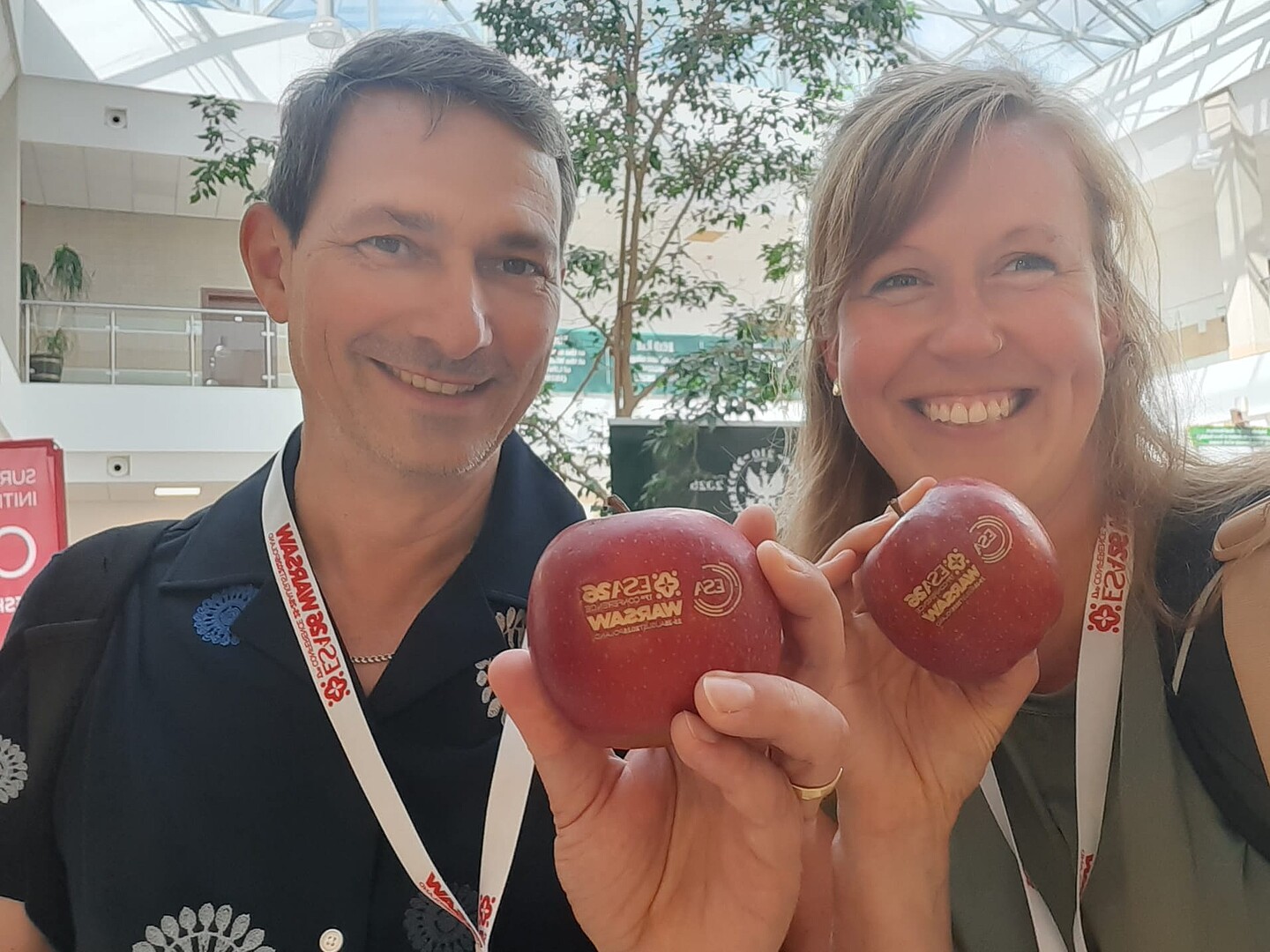
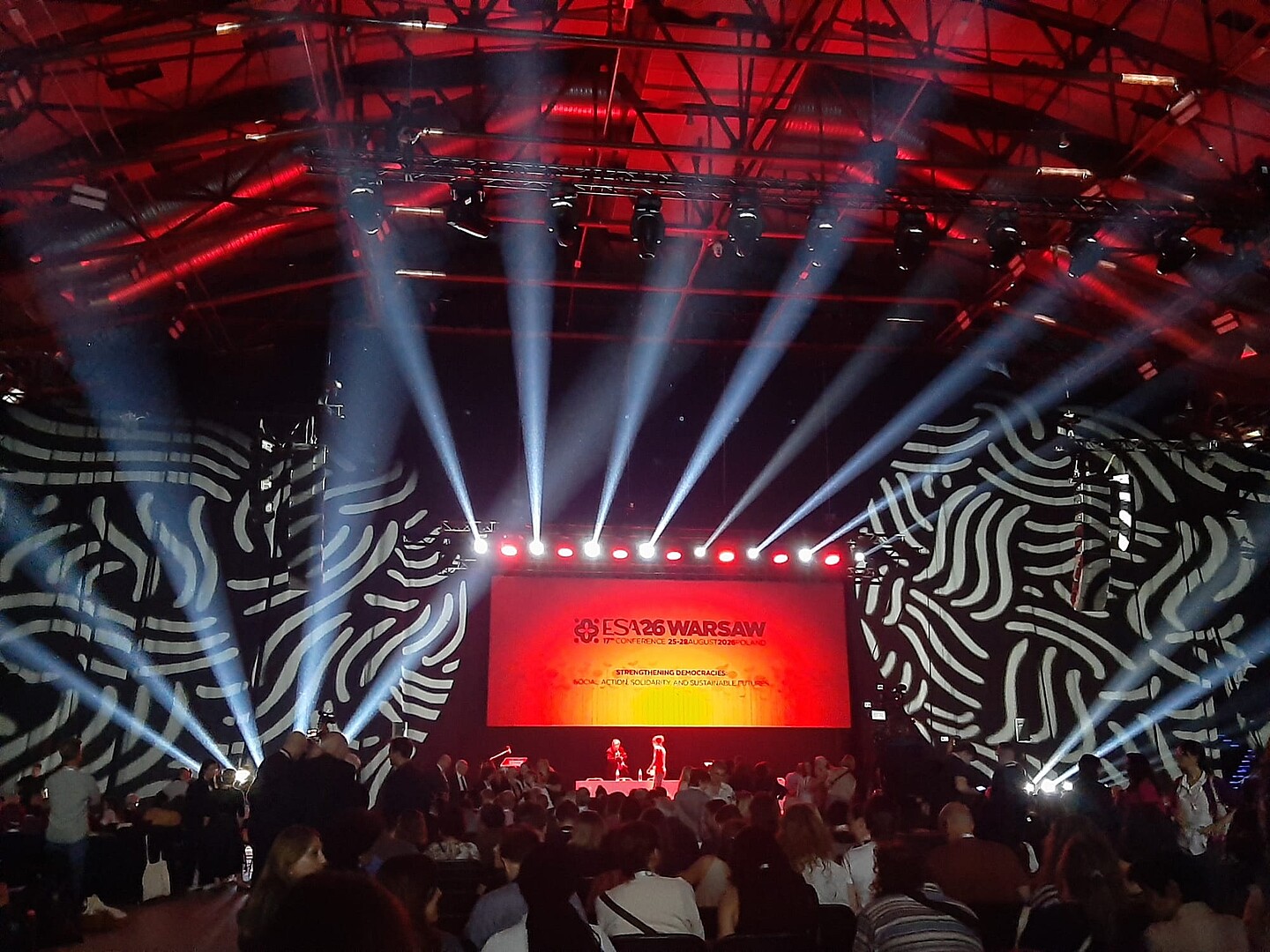

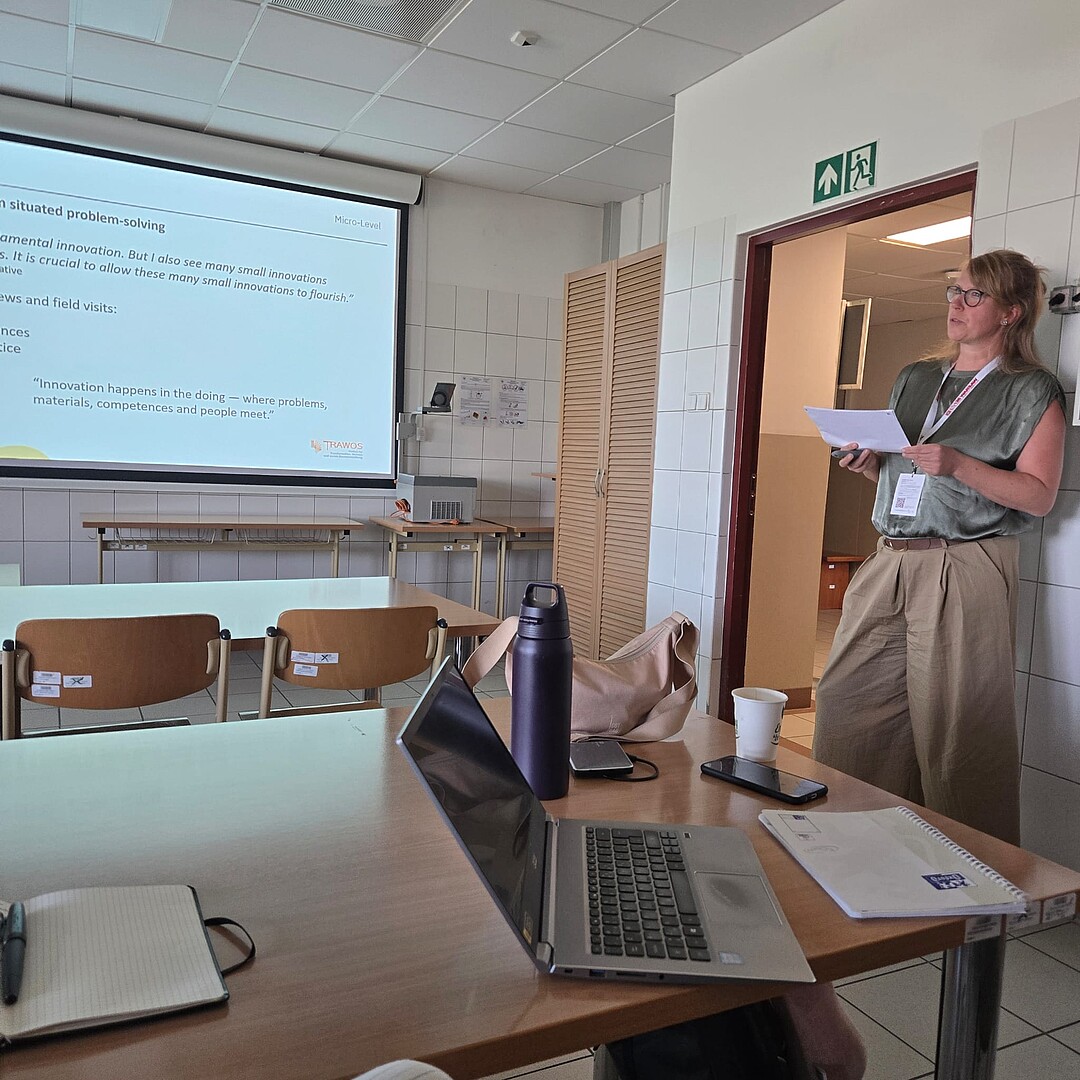
Innovation arises from ‘everyday problem-solving’
At the micro-level, the findings show that innovation arises primarily through situational problem-solving. Recurring practices include identifying problems, recombining existing skills or newly acquired knowledge, and experimenting with and jointly adapting solutions. Innovation therefore does not take place exclusively within formalised research and development processes, but often directly within day-to-day work. The examples examined demonstrate how technical solutions are further developed through practical experience, collaborative experimentation and iterative adjustments. In this context, the boundaries between ‘innovation’ and day-to-day work become blurred: innovation is less a clearly defined creative phase and more an ongoing process of practical action, problem-solving and adaptation.
Trust and social relationships as a resource for innovation
Another key finding concerns the social embeddedness of technological innovation. Trust, geographical proximity and shared experiences facilitate cooperation between the stakeholders involved. Personal relationships enable short lines of communication and can, in some cases, replace formal coordination mechanisms. Trust arises in particular through reliable cooperation and shared experiences from previous projects. At the same time, a tension emerges: geographical proximity reduces the effort required for coordination, but may simultaneously limit the pool of potential partners. For rural regions, therefore, linking local relationships with supra-regional and international knowledge, funding and market networks is of particular importance. Lusatia, for example, possesses industrial know-how, technical expertise and well-established relationships based on trust. At the same time, there are shortcomings in areas such as specialised knowledge resources, capital, internal research capacities and certain market relationships. Regional innovation capacity therefore arises from the interplay between local embeddedness and external reach.
Research and development projects: both enablers and constraints
The study devotes particular attention to the role of project-based research and development funding. Projects enable companies to test new solutions, secure resources and bring together complementary expertise. For start-ups, funded projects can also lend legitimacy in the eyes of investors and partners and provide access to research infrastructure and initial demonstration or reference applications. At the same time, funding structures themselves can influence which innovation pathways are pursued. Calls for proposals define topics and timeframes; administrative requirements can pose a challenge, particularly for smaller companies; and existing consortia may in some cases already be in place before the actual problem has even been defined. This creates the risk that a project’s starting point is not always a specific regional or business problem, but rather that a suitable topic is sought to fit an existing funding structure.
A key finding is therefore that projects are not neutral vessels for innovation, but rather temporary structures that organise relationships, knowledge and skills, thereby enabling and shaping innovation processes.
Technological innovation as a socio-technical process
The study thus shows that technological innovation in Lusatia cannot be understood either as an isolated act of invention or as a linear transfer of research into businesses. Rather, it is a distributed socio-technical endeavour based on the continuous coordination of people, technologies, organisations, funding structures and regional resources. This perspective is particularly relevant for rural regions undergoing transformation. Regional capacity for innovation does not depend solely on which technologies are developed or what funding is available. Equally crucial is how stakeholders work together, what relationships are forged, what knowledge is available, and how technological solutions can be integrated into existing regional structures and everyday practices.
The presentation at the ESA conference in Warsaw thus provided an opportunity to contribute research from Lusatia to a broader sociological discourse on science, technology and society, and to highlight technological innovation as a social, spatial and institutional process.
Leonie Liemich led the ATRAKTIV project at TRAWOS and has been a member of the institute ever since.
You can contact Leonie Liemich via the TRAWOS office

2. Obergeschoss
2. Obergeschoss