

Message details
Governing Innovation in Rural Regions
TRAWOS research at the “Reinventing Rural Spaces” conference in Porto
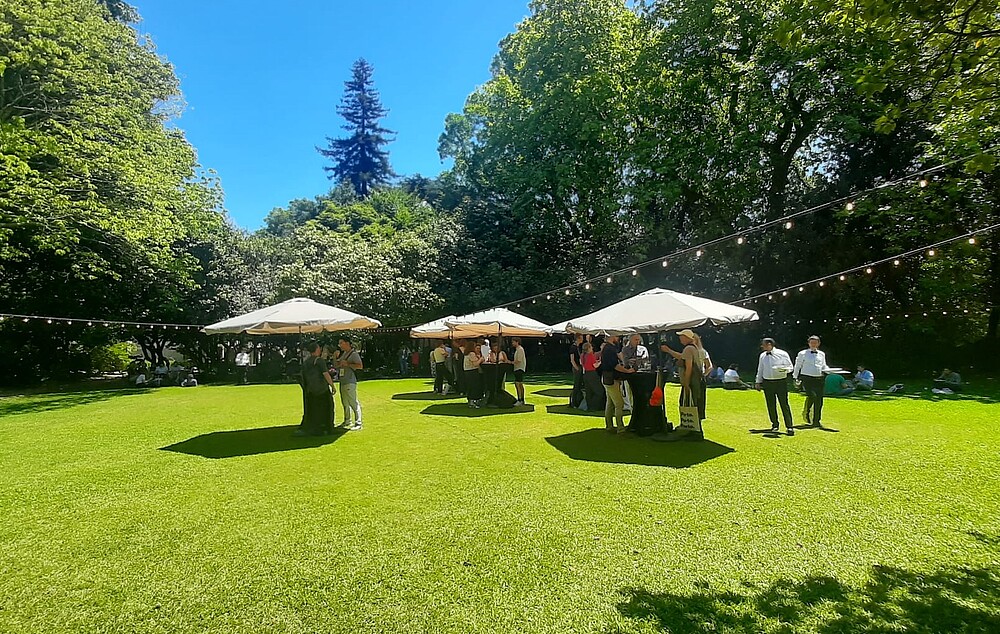
Leonie Liemich, a research associate at the TRAWOS Institute at Zittau/Görlitz University of Applied Sciences, presented research findings on the governance of innovation in rural regions undergoing transformation
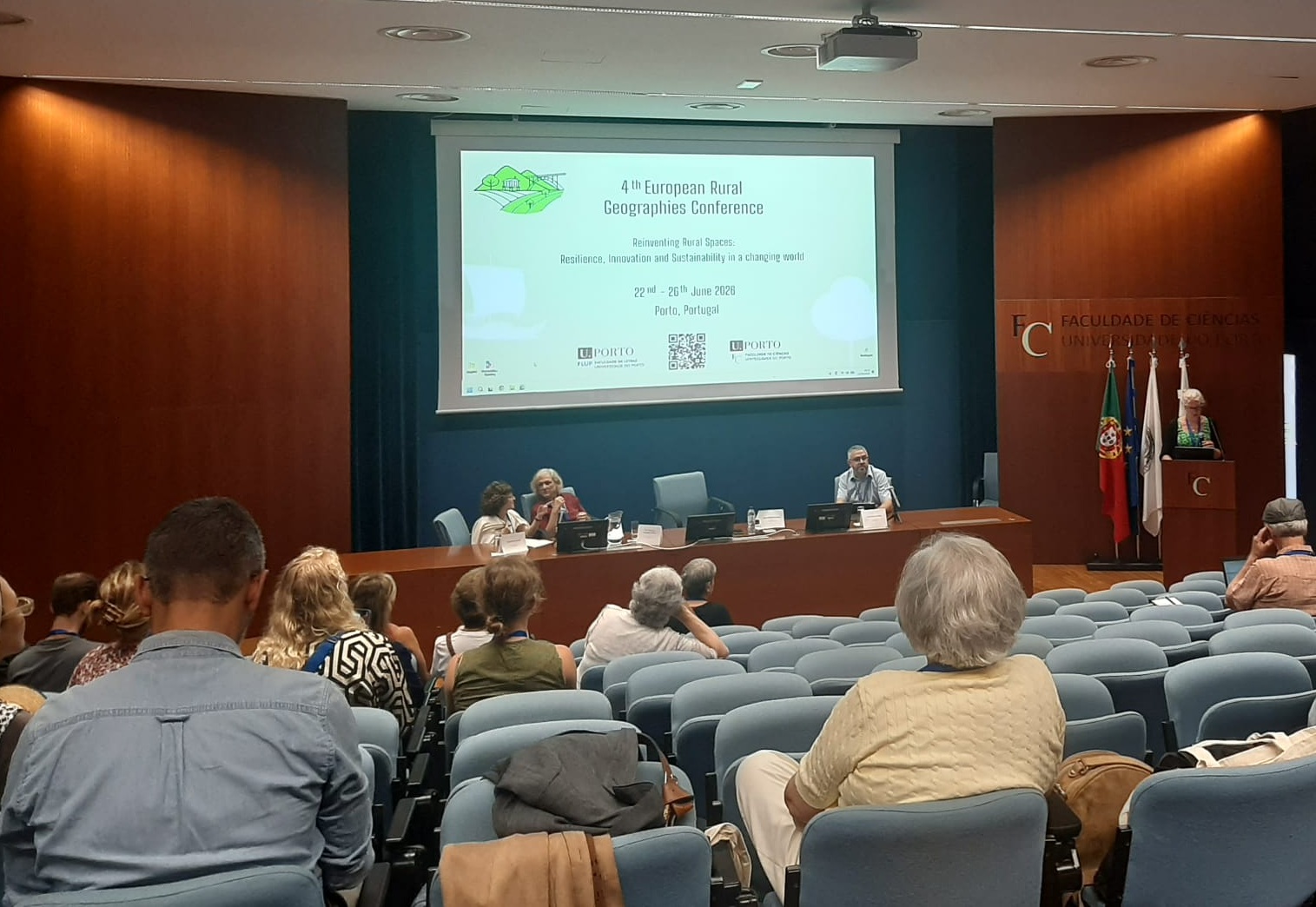
From 22 to 26 June 2026, the international conference ‘Reinventing Rural Spaces: Resilience, Innovation and Sustainability in a Changing World’ took place in Porto. The conference focused on current developments and challenges facing rural areas and brought together researchers from various disciplines and countries. The main focus was on questions regarding the future shaping of rural areas in the face of climate change, demographic shifts, social inequalities, technological development and new forms of regional governance. The conference papers were organised around twelve thematic areas. These ranged from agricultural and food systems, climate change and landscape development, through social vulnerabilities and spatial inequalities, to digitalisation, innovation, rural infrastructure and new theories and methods in rurality research. A further focus was on ‘Governance and Planning in Rural Areas’.
Governance as the key to regional transformation processes
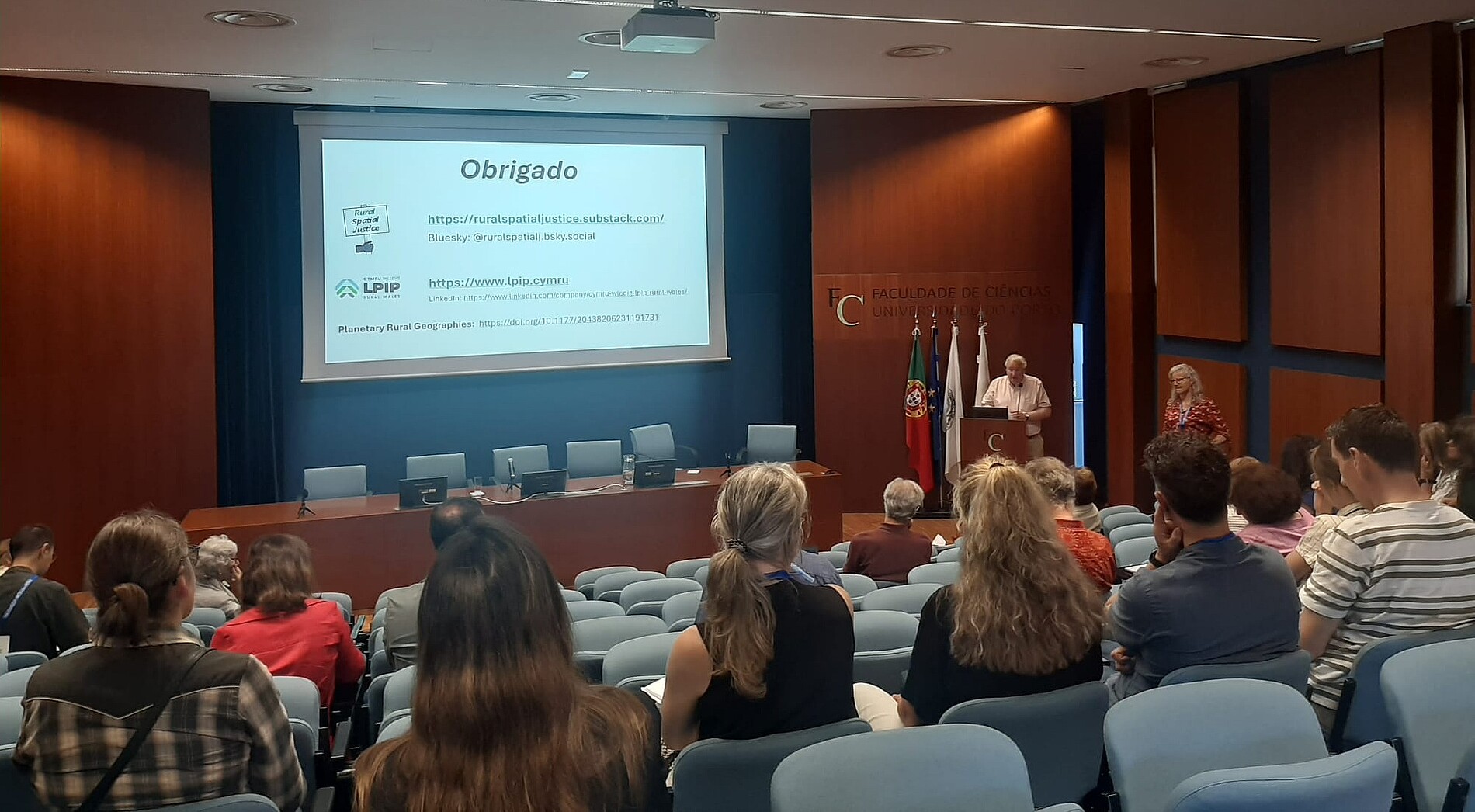
In this thematic area, Leonie Liemich, MA, an associate researcher at TRAWOS – the Institute for Transformation, Housing and Social Spatial Development at Zittau/Görlitz University of Applied Sciences, presented her paper ‘Governing Innovation in Rural Regions: The Case of Lusatia (Germany)’. The starting point for the study is the observation that innovation is often regarded as a key mechanism for coping with structural change in rural regions. However, innovation does not arise automatically. Rather, it is organised and shaped by specific governance structures, constellations of actors and decision-making processes. The central research question is therefore: How do specific regional governance arrangements structure, enable and constrain the development of innovation pathways in rural regions undergoing transformation? For her analysis, Liemich draws on the concept of regional governance arrangements. These are understood as temporally and institutionally dynamic constellations of actors and institutions that coordinate joint action. They arise through negotiation processes, are often fragile and project-specific, and at the same time exhibit power asymmetries and divergent interests. It is precisely for this reason that they offer a suitable analytical approach for examining transformation processes and the emergence of regional innovation pathways.

Governance in Lusatia: The ‘Lausitz – Life & Technology’ Alliance
This study conducts an empirical analysis of the Lusatian innovation alliance ‘Lausitz – Life & Technology’ (L&T), which received funding under the Federal Ministry of Research and Technology’s (BFTR) ‘WIR! – Change through Innovation in the Region’ programme. The aim of the alliance was to strengthen regional economic development and help address the shortage of skilled workers. The funding programme initially adopted a deliberately broad definition of innovation, encompassing not only technological innovations but also organisational, social, product-, service- and business model-related innovations.
The alliance brought together three fields of innovation:
- Additive manufacturing
- Energy systems
- Attractive educational, working and living environments
The third field of innovation, in particular, focused explicitly on social innovation and new approaches to regional development. Methodologically, the study is based on a qualitative, process-oriented case study design. The analysis included, amongst other things, strategy papers, interim reports and other process-related documents. In addition, internal reflection workshops held by the strategy team were taken into account. The combination of various data sources enables methodological triangulation and a process-based reconstruction of the changing structures of actors, institutions and decision-making. In the case of the L&T Alliance, social innovation was not formally ruled out, but was structurally less visible – and therefore less able to gain traction – due to institutional routines, evaluation practices and dominant notions of value creation.
When a broad understanding of innovation meets technological dominance
A key finding of the study is the alliance’s evolution from an initially broad understanding of innovation towards a clearly technology-driven approach to innovation. Although the funding programme and the alliance explicitly allowed for different forms of innovation, the implementation revealed a clear focus on technological projects. By 2022, nine technological projects had received funding totalling 6.56 million euros, whilst four socio-hybrid projects accounted for 1.20 million euros. The analysis shows that this development cannot be attributed solely to the substantive interests of the participating stakeholders. Rather, specific governance mechanisms played a key role. These included, amongst other things, funding and evaluation criteria, the composition of the steering committee, existing funding logics, and the visibility and communication of project successes. Technological innovations could be more easily linked to measurable results and economic value creation. This highlights a fundamental tension: there can be a discrepancy between what is formally classified as innovation and what is actually perceived as worthy of funding and as creating value.
Governance as a sphere of power and shaping
The study thus looks beyond the question of which innovations a region needs. Equally crucial is the question of who, within regional innovation systems, decides what counts as a relevant innovation and which development pathways receive support. Governance arrangements are therefore not merely neutral coordination structures. They influence the distribution of resources, the legitimacy of different forms of knowledge, the visibility of stakeholder groups and, ultimately, the development of regional innovation pathways. For rural regions undergoing transformation, this leads to an important conclusion: a successful innovation policy requires not only financial resources and strategic objectives, but also reflexive governance structures that incorporate different forms of knowledge and stakeholder groups and critically reflect on existing power asymmetries.
Scope for shaping a more balanced innovation development
The case study shows that technological dominance is not necessarily set in stone. Within the L&T alliance, various approaches to further developing governance were discussed and implemented. These included diversifying the steering bodies, adapting evaluation criteria, strengthening intermediaries, and engaging in dialogue with other regional innovation alliances. For example, evaluation criteria were expanded to give greater weight not only to economic indicators but also to aspects such as partner diversity, regional relevance to innovation, skills development and regional value creation. At the same time, collaborations with other WIR! alliances from eastern Germany opened up opportunities for joint learning and reflection on structural challenges.
Questions from the discussion: learning, participation and sustainability
For example, evaluation criteria were expanded to take greater account not only of economic indicators but also of aspects such as partner diversity, regional relevance to innovation, skills development and regional value creation.
At the same time, collaborations with other WIR! alliances from eastern Germany opened up opportunities for joint learning and reflection on structural challenges. The ensuing discussion focused in particular on the long-term impact and sustainability of governance experiences. Questions were raised as to how the experience gained within the L&T Alliance regarding the management of governance arrangements could be incorporated into further regional development, and in what form this knowledge could be documented and made accessible to other regional stakeholders as a learning process.For example, evaluation criteria were expanded to take greater account not only of economic indicators but also of aspects such as the diversity of partners, regional relevance to innovation, skills development and regional value creation. At the same time, collaborations with other WIR! alliances from eastern Germany opened up opportunities for shared learning and reflection on structural challenges.
Insights for the planning of rural areas undergoing transformation
The ensuing discussion focused in particular on the long-term impact and sustainability of governance experiences. Questions were raised as to how the experience gained within the L&T Alliance regarding the management of governance arrangements could be incorporated into future regional development, and in what form this knowledge could be documented and made accessible to other regional stakeholders as part of a learning process. Further questions related to the involvement of smaller partners in the alliance and the extent to which smaller stakeholders could also assume independent or leading roles within the governance structures. There was also discussion as to whether combining social and technological innovation themes within a shared innovation system is generally advisable, and under what conditions such a combination can be successfully achieved. Finally, the question of the long-term sustainability of the governance changes initiated was raised: to what extent could the adjustments to the composition of the advisory board or steering committee, as well as the expanded selection and evaluation criteria, be transferred to other regional development governance structures beyond the duration of the alliance? Linked to this was the overarching question of how project-based governance arrangements can give rise to sustainable structures and institutional learning for regional development.
Insights for the design of rural transformation areas
The presentation in Porto thus highlighted the importance of governance for the design of resilient and sustainable rural areas. The findings can be summarised in three key points:
- Regional innovation ecosystems have various governance arrangements, which are also subject to change.
- Governance structures have a decisive influence on which innovation pathways emerge and which actors and forms of knowledge become visible within them.
Technological dominance is not inevitable; rather, it can be reflected upon and altered through changes in the constellations of actors, broader evaluation criteria and stronger intermediary structures.
The study thus contributes to the current debate on the future of rural areas: resilience and sustainability do not depend solely on technological innovations or available resources. Equally relevant are the institutional and social conditions under which innovation emerges, is negotiated and embedded in regional development processes. The ‘Reinventing Rural Spaces’ conference provided an international platform for this purpose, enabling experiences from Lusatia to be brought into the broader academic discourse on governance, innovation and the transformation of rural areas, and to be discussed in the light of international research approaches. The next conference will take place in 2028 in Brno, in the Czech Republic.
You can contact Leonie Liemich via the TRAWOS office

2. Obergeschoss
2. Obergeschoss