

Message details
10 years of research into women's lifestyles in regions undergoing structural change
TRAWOS Institute publishes brochure on gender-sensitive research in rural regions

The TRAWOS-Institut at Zittau/Görlitz University of Applied Sciences has published a new brochure offering comprehensive insight into a decade of gender-sensitive research. The publication written by Julia Gabler, Bernadette Rohlf, Susanne Lerche, Monique Ritter, Anika Noack und Annika Runge focuses on the living conditions and prospects for women in Upper Lusatia.
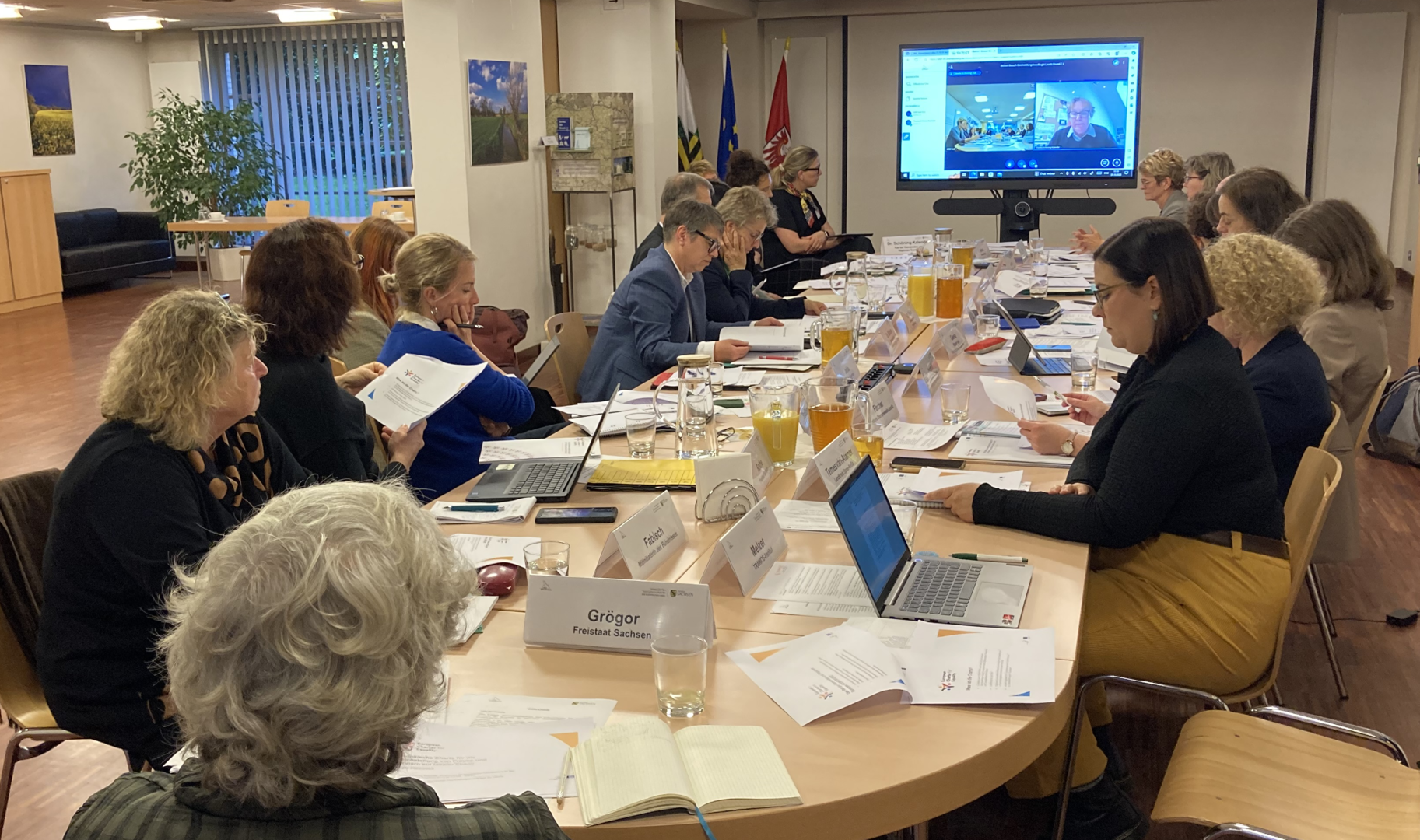
The study „Wer kommt? Wer geht? Wer bleibt?“ (Who is coming? Who is leaving? Who is staying?) examined migration dynamics and developed targeted recommendations for action to make the region more attractive and livable for women. Close cooperation with local stakeholders led to an intensive exchange between science and practice. Networks such as "F wie Kraft" (F for Power), "Frauen.Wahl.LOKAL Oberlausitz" (Women.Vote.LOCAL Upper Lusatia) and the Bündnis der Kommunalen Gleichstellungsbeauftragten contribute to strengthening women as key players in regional structural change.
The research is also attracting attention at EU level: the findings and concepts developed by the TRAWOS Institute are being used in Brussels as a guide for gender-equitable policy-making.
The brochure also highlights the gender-sensitive organizational development at Zittau/Görlitz University of Applied Sciences, including the female professor program and offers insights into the "GAP" and "FioKo", projects, which focus on promoting women in science and STEM professions. At the same time projects such as „Ehrenamt im Umbruch“ (Volunteering in Transition) and „ENKOR“ show how much of women's commitment remains hidden and how tensions between traditional role models and innovative creativity can be overcome.
A guest article examines the effects of new government settlements in Lusatia on the labor market. The results show that the creation of new jobs significantly improves the prospects for women to remain in the region.
Scientific findings, regional stakeholder knowledge and the desire to make an impact are combined in a regional design process.
”Transdisciplinary exchange and collegial cooperation between research and practice have not only yielded insights, but also inspired transformative practice. Dr. Julia Gabler, director of the TRAWOS Institute, sees the work as a successful bridge between science and practice. With this brochure the TRAWOS Institute is setting an example for sustainable regional development and showing how gender-sensitive perspectives can be an integral part of successful structural policy.
Gallery of research projects

The "leaky Pipeline” illustrates how the proportion of women in professorial positions is declining, while the proportion of men is increasing.
Your contact person at TRAWOS

2. Obergeschoss