

Message details
Robotics in Healthcare – A Dialogue Between Practice and Science
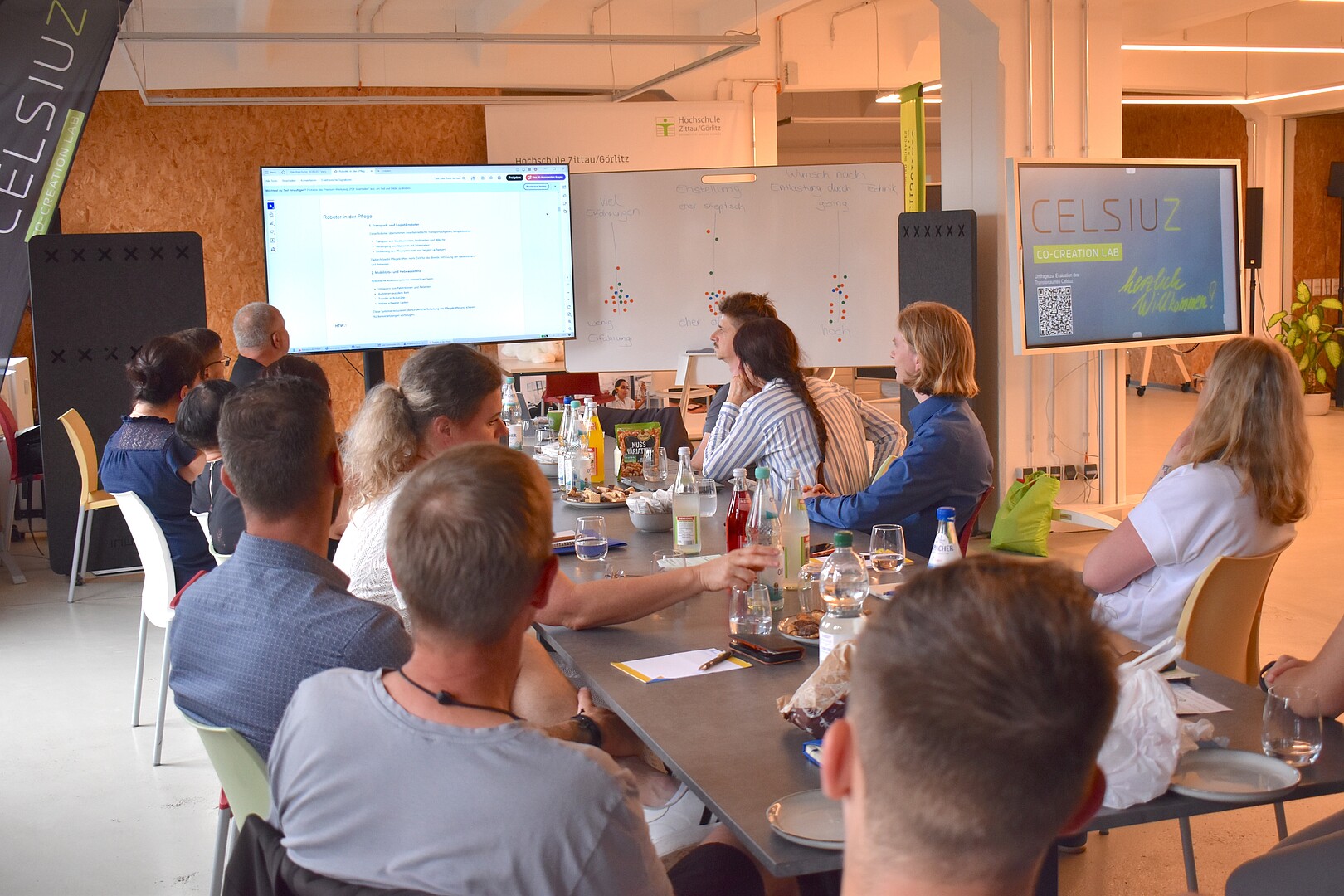
What can robotics achieve in the field of care—and what can’t it do? This question was the focus of a participatory workshop held on July 1, 2026, at CELSIUZ Zittau, organized by the Institute for Health, Aging, Work, and Technology as part of the Saxony⁵ collaborative project.
![[Translate to Englisch:] mehrere Teilnehmer schauen auf einen Monitor](/fileadmin/_processed_/5/c/csm_DSC_0003_07f0dc0db8.jpg)
![[Translate to Englisch:] Mann mit Roboter](/fileadmin/_processed_/8/8/csm_DSC_0009_dcc80a6405.jpg)
Nursing Practice Meets Research
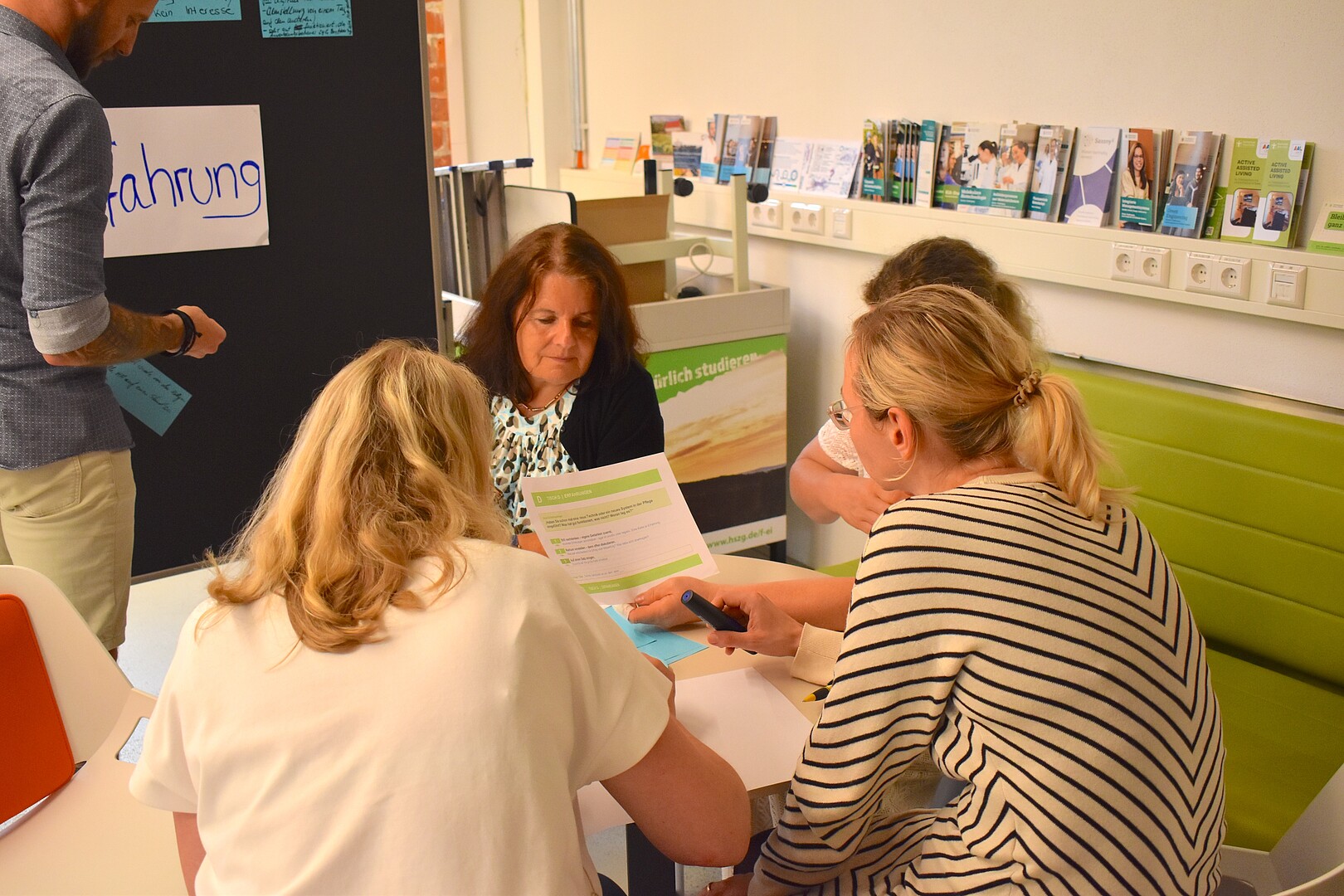
The workshop was deliberately designed as a participatory event. The focus was not on a lecture about robotics, but rather on a collaborative exchange: nursing staff, facility directors, digitalization managers, and individual representatives from the fields of science and technology shared their perspectives, everyday experiences, and critical questions. Participants were thus not viewed as the target audience for a presentation, but as active contributors to a shared learning process.
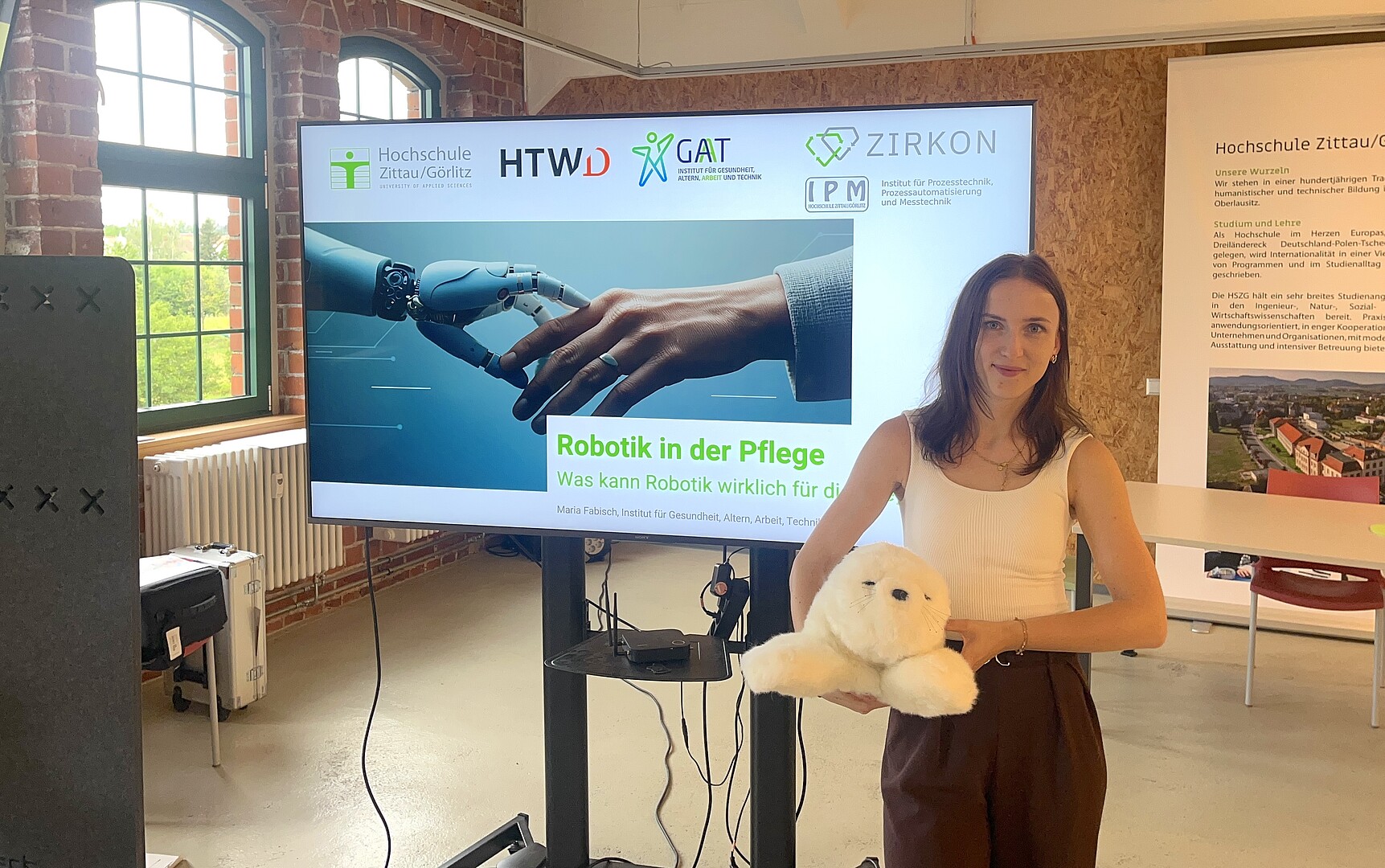
The evening began with a keynote presentation by Prof. Dr. Hans Böhme of HTWD, which provided an overview of the current state of research on robotics and assistive technologies in nursing care, thereby laying the groundwork for the subsequent table discussions. The centerpiece of the evening was the World Café: Four tables, each with a guiding question, invited participants to discuss the topics in rotating small groups. After each round, participants switched tables so that, over the course of the evening, everyone had the opportunity to engage with the topics from all four tables. At the end, the key insights were compiled and reflected upon in a joint plenary session.
Insights from the Field: What the Workshop Revealed
The workshop yielded nuanced insights into the attitudes, experiences, and needs of nursing practice regarding the use of robotics and digital technologies.
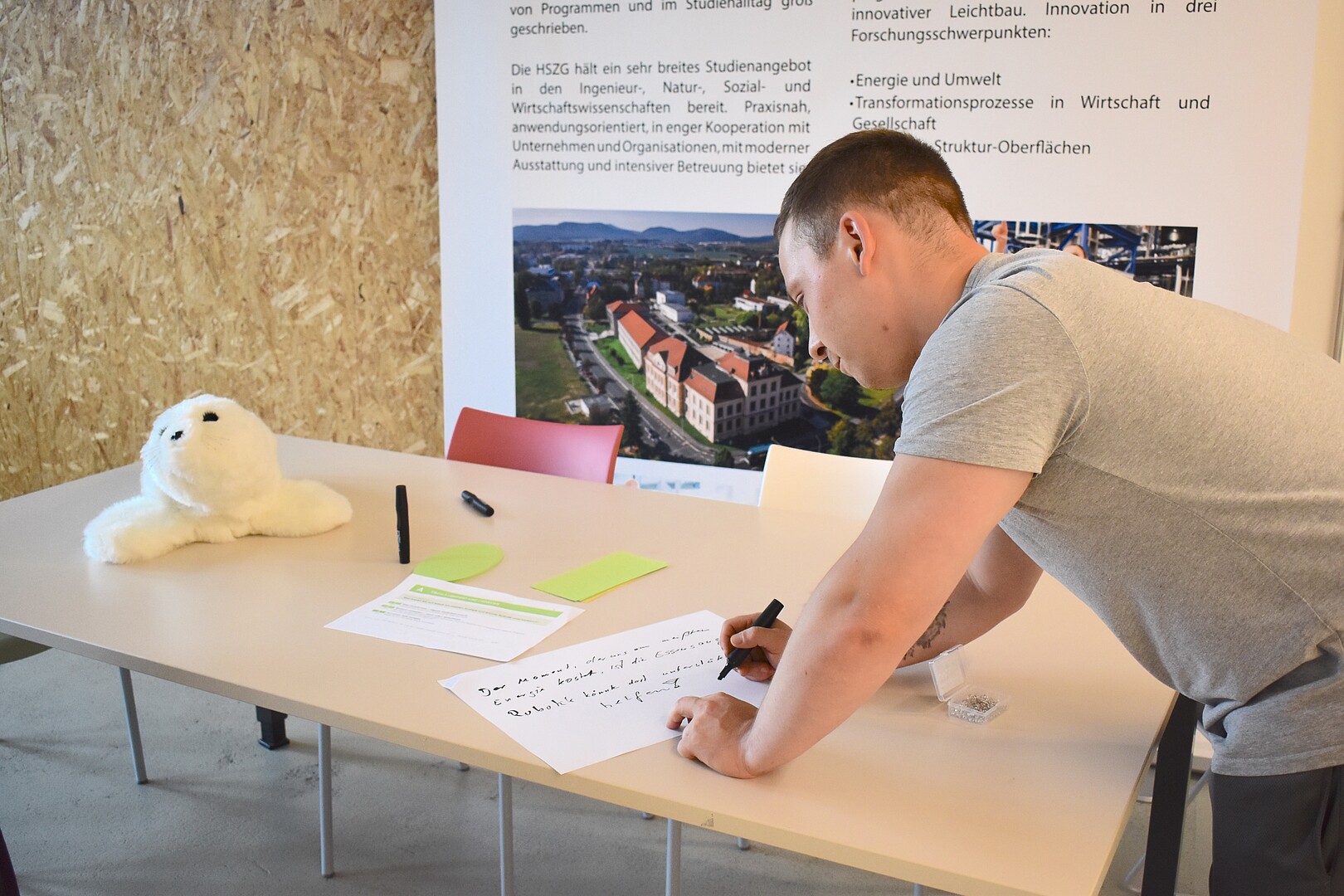
Table A: Opportunities – Where Can Technology Help?
![[Translate to Englisch:] Mann notiert etwas auf einem großem Blatt](/fileadmin/_processed_/9/d/csm_DSC_0013_45d935605d.jpg)
Treatments that reduce physical strain received the most support—particularly lifting aids, assistance with mobility and positioning, as well as fall detection and nighttime monitoring systems. These technologies were seen as useful ways to reduce strain, protecting caregivers while also increasing residents’ safety. Digital care documentation and reminder systems were also recognized as practical aids in daily life. The group was significantly more cautious regarding social robots and communication assistants: While potential applications for engaging people with dementia were discussed, this was done with the clear caveat that human attention and the quality of relationships must not be replaced by technology. Technology was consistently viewed as a supplement—not a substitute.
Table B: Limits—What Technology Must Not Do.
![[Translate to Englisch:] Beschriebene Moderationskarten liegen auf einem Tisch](/fileadmin/_processed_/2/a/csm_IMG_1074_Kopie_3afe3cd060.jpg)
The discussion at Table B made it clear that there are areas in which the use of robotics and digital assistance is fundamentally rejected. The central question was: What should technology not be allowed to do? The participants agreed that wherever physical closeness, pastoral care, or individual human dignity are directly involved, clear ethical boundaries must be drawn. At its core, care is a human relationship—characterized by empathy, trust, and connection. This quality cannot and should not be replaced by machines. Technology was consistently viewed as a complement to, rather than a substitute for, human care. The group took a particularly critical view of social robots in end-of-life care, as well as sensor-based monitoring systems, which are perceived as an intrusion into the privacy and autonomy of those in need of care.
Table C: Barriers—Where the Path to Technology Is Still Rocky
![[Translate to Englisch:] Mehrere Teilnhemer schauen auf eine Pinnwadnd mit Moderationskarten](/fileadmin/_processed_/b/5/csm_DSC_0016_3f1a59b0a6.jpg)
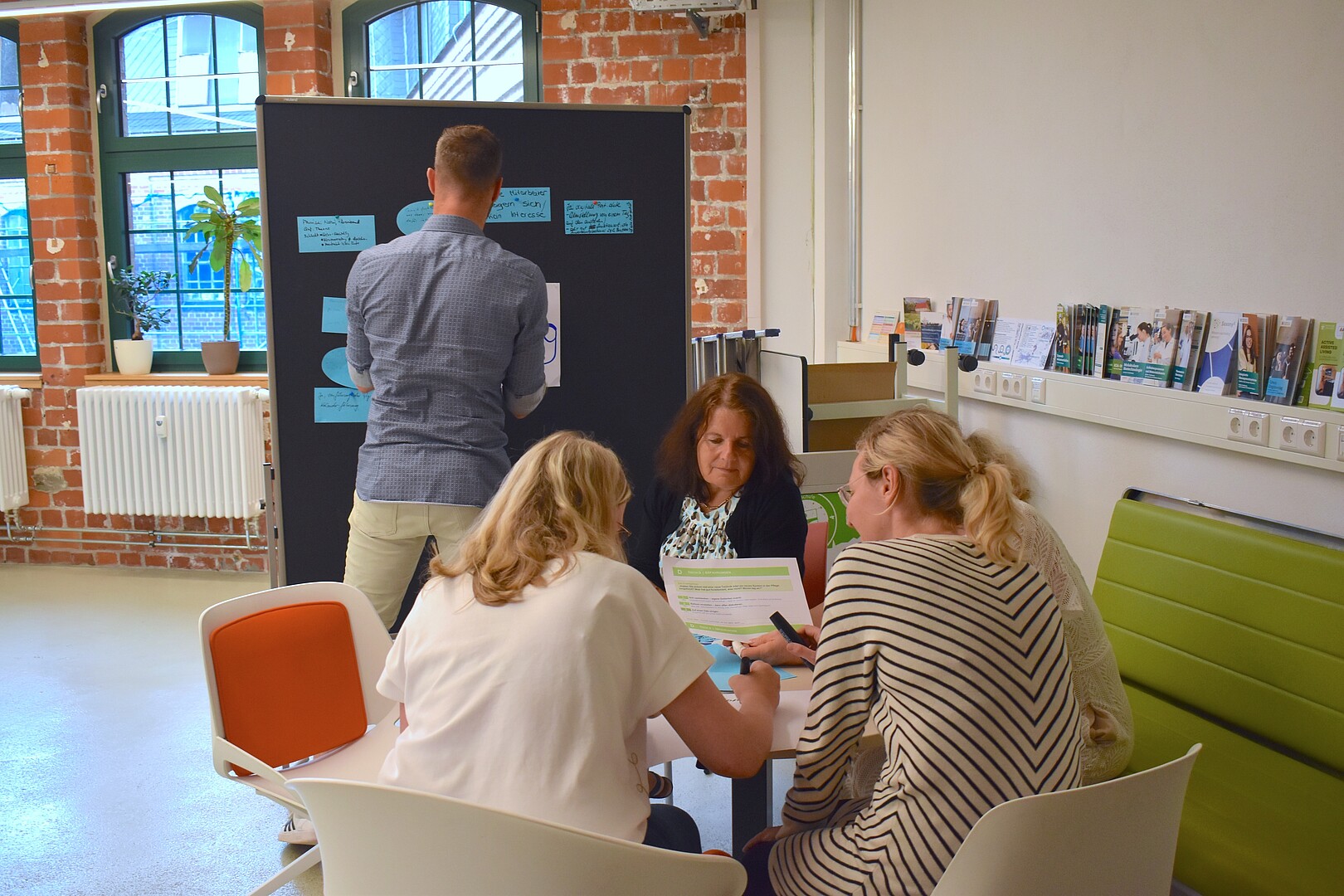
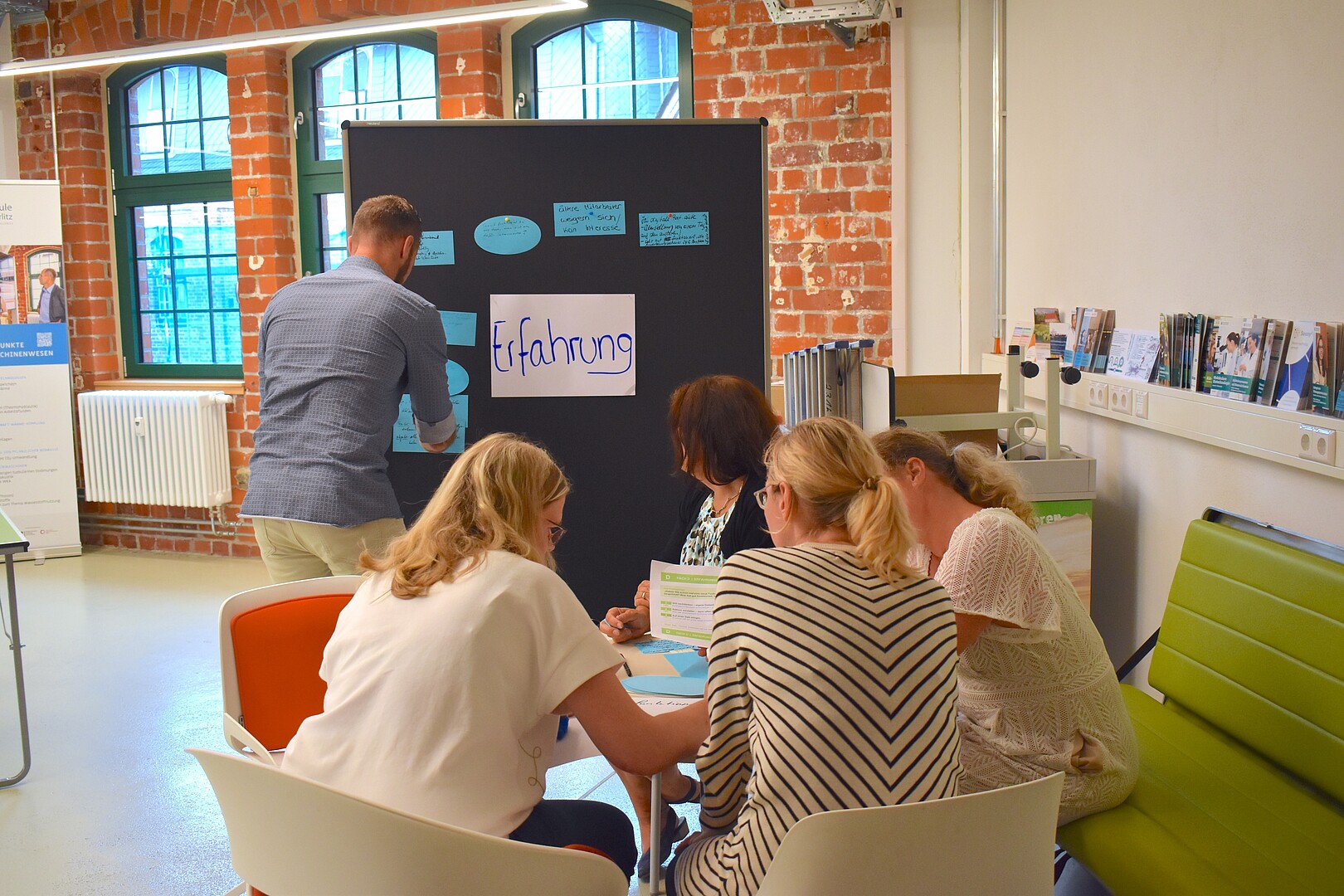
Table C focused on obstacles that hinder the practical use of technology—that is, barriers that are, in principle, surmountable but currently exist in many places. Four barriers were mentioned particularly frequently: high acquisition costs coupled with confusing funding structures; data protection concerns regarding sensor-based systems that record movements or workflows; generational differences in the acceptance of technology, particularly among older employees and those in need of care; and, fourth, the lack of a legal and liability framework, which leads to uncertainty in practice. Overall, it became clear that barriers often arise not from the technology itself, but from a lack of involvement of care staff in decision-making processes and a lack of support during implementation.
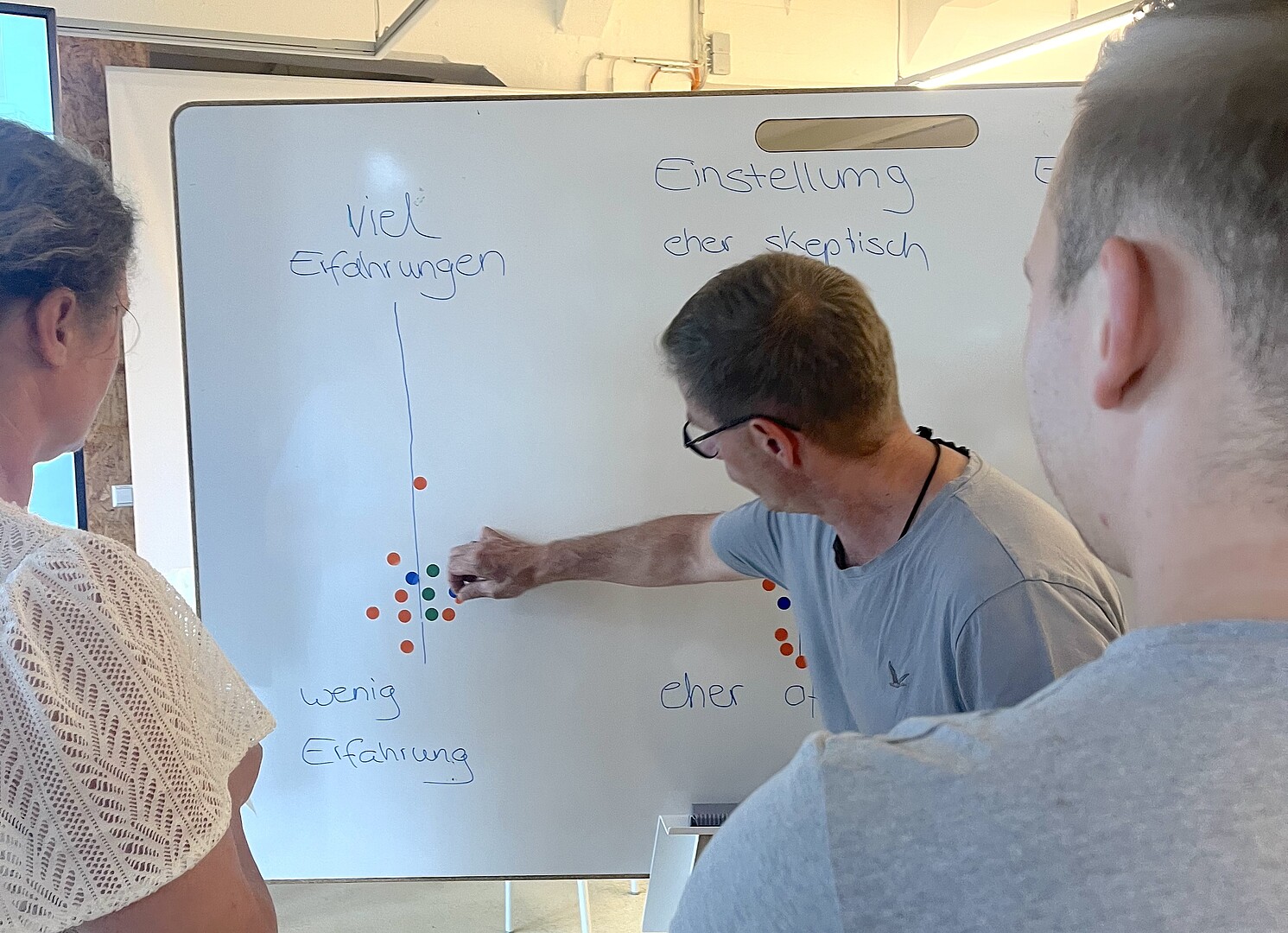
Table D: Experiences—What We Already Know from Practice
![[Translate to Englisch:] Mann klebt Punkte an Whiteboard](/fileadmin/_processed_/f/d/csm_IMG_0636_Kopie_3cb85ebfea.jpg)
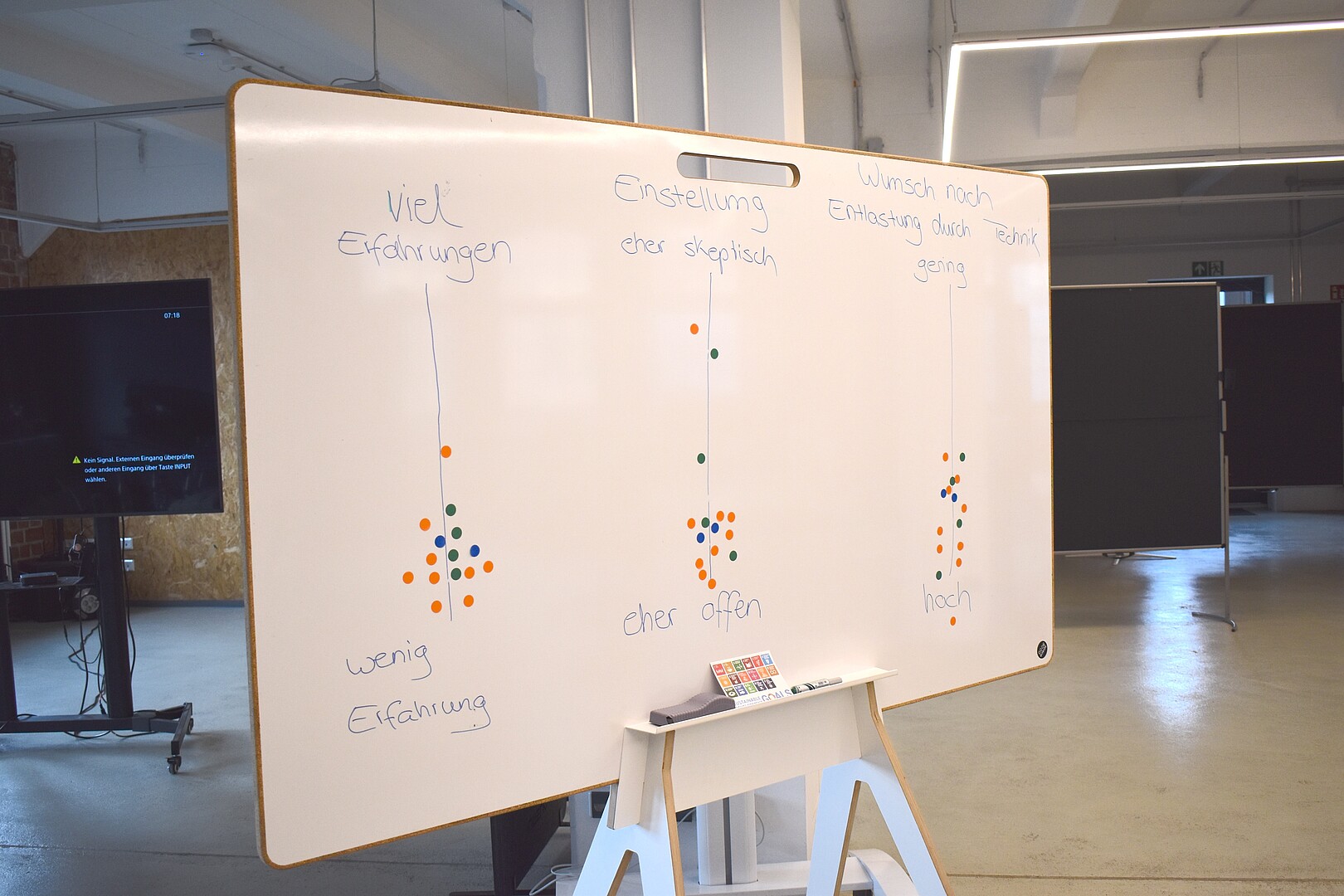
Real-world experiences have been mixed but insightful. Some facilities are already reporting positive effects from digital care documentation, electronic calendar tracking, and AI-powered writing aids. In some cases, sensor mats and emergency call bracelets are already part of the standard equipment. When technology works, two factors are crucial: individual adaptation to residents’ needs and reliable 24-hour user support. When technology fails, it is rarely due to the technology itself—but rather to a lack of training for all staff and a lack of structural integration. The result is often silent resistance: systems are introduced but avoided in everyday practice. The group agreed: the integration of technology into care is not a technical project, but rather one of organizational and cultural change.
The complete results from all four breakout sessions, as well as the resulting recommendations for action, are documented in the GAT's event documentation.
Circular Transfer – From Research to Practice – and Back Again
A key goal of the evening was circular knowledge transfer: The opening scientific keynote address brought the latest research findings into practice. The results of the World Café are now flowing back in the opposite direction into GAT’s research. This understanding of knowledge transfer as a reciprocal process is characteristic of the co-creation approach. Research is not conducted in isolation from practice, but in collaboration with it. Problem definitions, solution approaches, and evaluations thus emerge through joint dialogue.
![[Translate to Englisch:] Roboter Robber](/fileadmin/_processed_/d/5/csm_DSC_0043_af04df18f7.jpg)
![[Translate to Englisch:] Teilnehmende sitzen an einem Tisch. Prof. Böhme präsentiert den Input.](/fileadmin/_processed_/5/c/csm_DSC_0003_3c074620e6.jpg "[Translate to Englisch:] Foto: Maria Fabisch")
![[Translate to Englisch:] Teilnehmer beobacheten die Demo des Roboters](/fileadmin/_processed_/3/e/csm_DSC_0010_c2bc746048.jpg)

The workshop was held as part of the Saxony⁵ collaborative project, a knowledge transfer network of the five Saxon universities of applied sciences, funded by the Federal Ministry of Research, Technology, and Space (BMFTR) and the Joint Science Conference (GWK) under the “Innovative University” program.
2.Obergeschoss