

Message details
The GAT Institute at the Hirschfelde Future Days
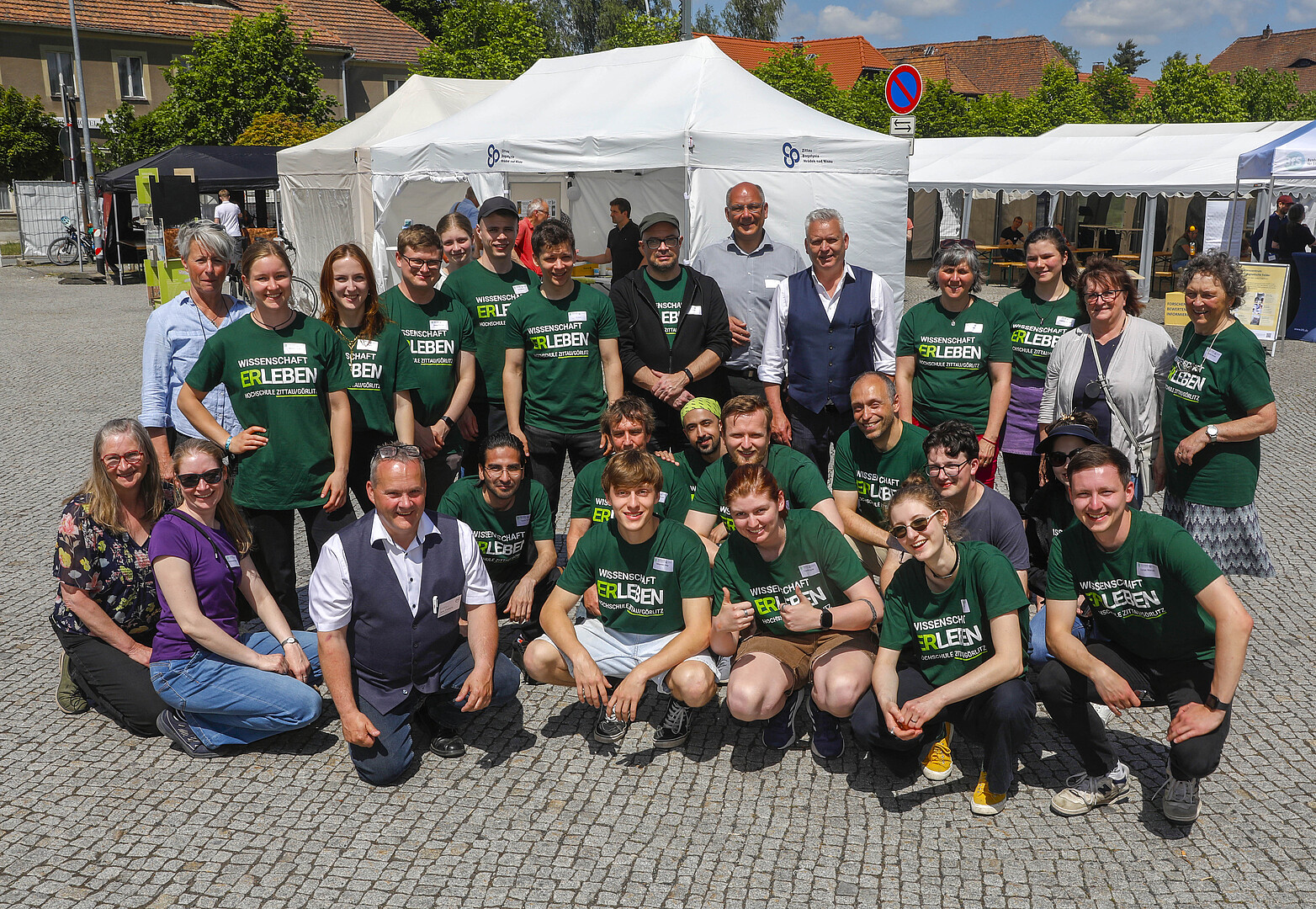
From 29 to 31 May 2026, Hirschfelde’s market square was transformed into a venue for hands-on science. The Institute for Health, Ageing, Work and Technology (GAT) at Zittau/Görlitz University of Applied Sciences was also present, demonstrating to a wide audience how technology can support life in old age and in care settings.
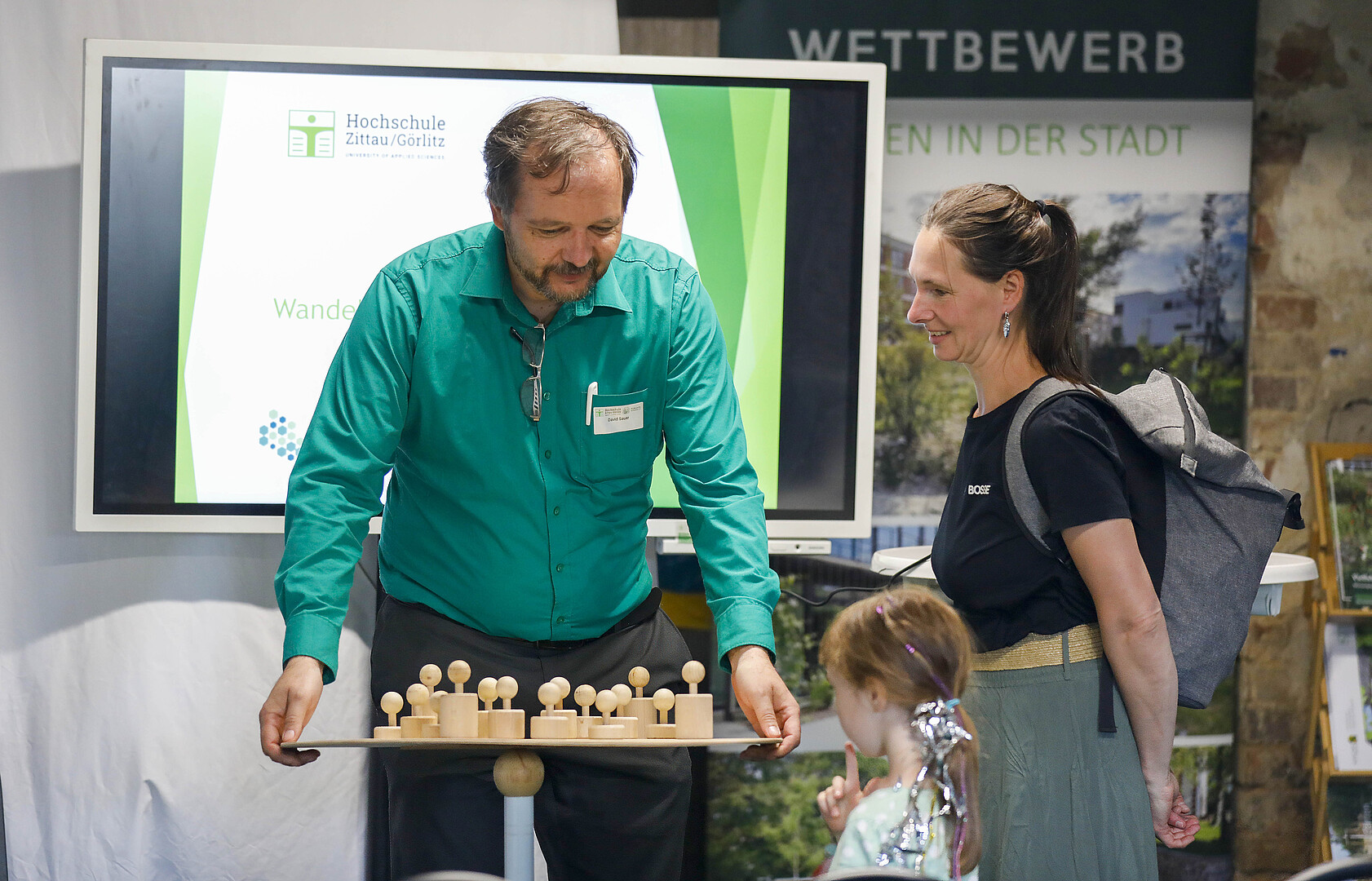
![[Translate to Englisch:] Besucherin lässt sich die Technik erklären](/fileadmin/_processed_/c/8/csm__00A8009_0f9e53ae82.jpg)
News from research and practice
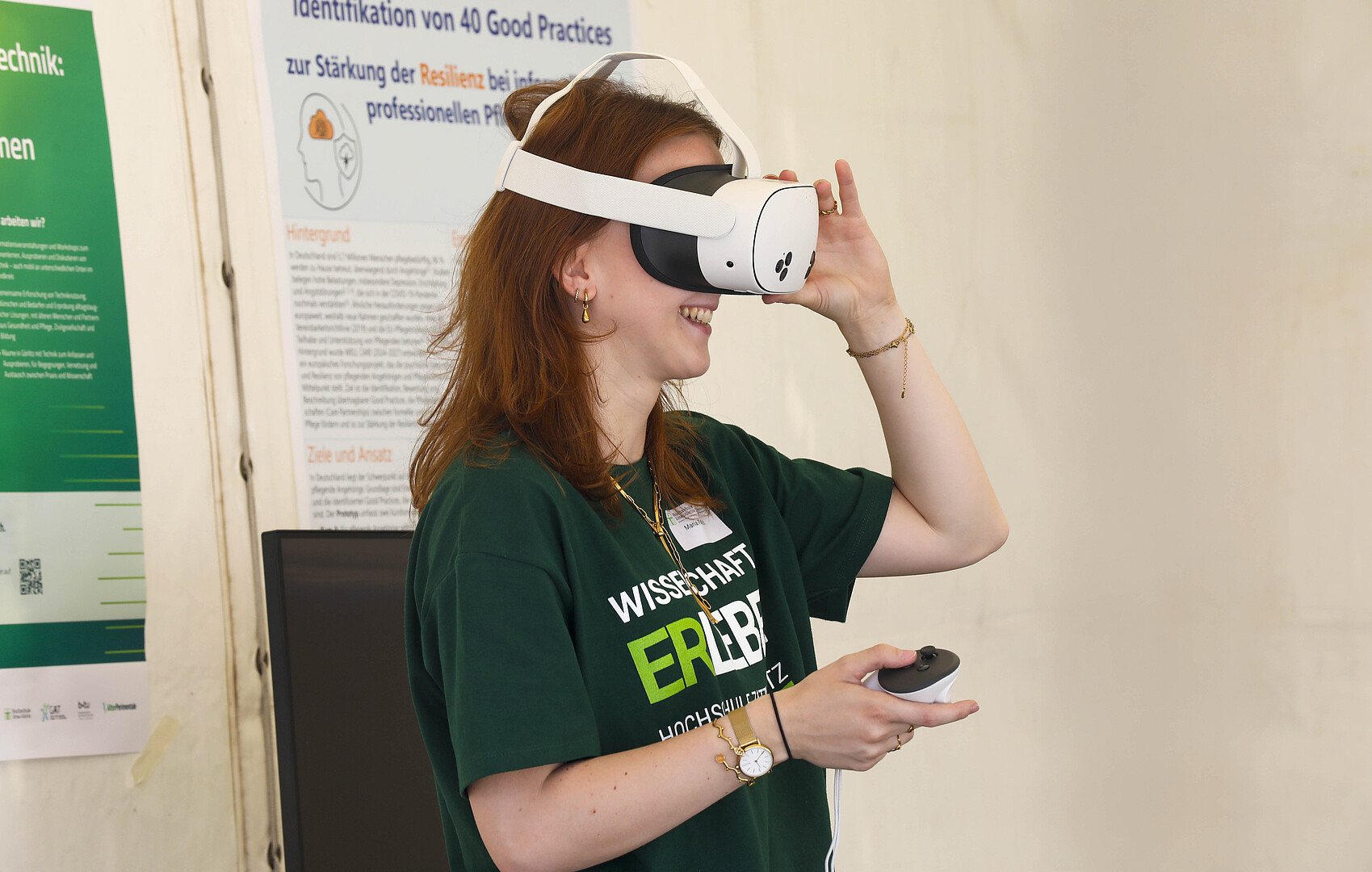
![[Translate to Englisch:] Besucherin mit VR-Brille](/fileadmin/_processed_/7/7/csm_IMG_9981_b3f158686e.jpg)
One of the projects presented was WellCare, an EU-funded initiative that is researching approaches to improve care and quality of life in old age. In addition, the GAT Institute presented the newly established practice research centre in Görlitz, which is currently being set up and is intended to serve as a link between academia and care practice in future.
The PerspektiveArbeitLausitz (PAL) project was also represented with a specially equipped bus. The mobile information stand enabled visitors to find out about the project’s content directly on site and to engage in conversation with the researchers. The project brings together the expertise of five universities as well as numerous companies and associations from Saxony and Brandenburg, with the aim of shaping the future of the world of work in Lusatia.
AAL Laboratory: Experiencing technology in later life
![[Translate to Englisch:] Besucheruín im Alterssimulationsanzug](/fileadmin/_processed_/0/0/csm_IMG_9956_15c798348f.jpeg)
The AAL (Ambient Assisted Living) laboratory demonstrated, using concrete, real-life examples, how technology can already help older people to live independently and on their own terms for as long as possible. From smart sensors and fall detection to digital assistance systems, visitors were able to gain a practical insight into how modern technology is used in the everyday lives of older people.
The age simulation suit proved particularly popular: anyone who wished to could try it on and experience for themselves how ageing affects mobility, strength and perception. Stiffened joints, heavy limbs and fogged-up lenses simulated typical age-related limitations – such as reduced mobility or impaired vision. For many participants, this hands-on experience was a memorable one that gave them a whole new understanding of the challenges older people face in their daily lives – and how important it is to support them with appropriate technology.
Living Library: A conversation with David Sauer and Maria Fabisch
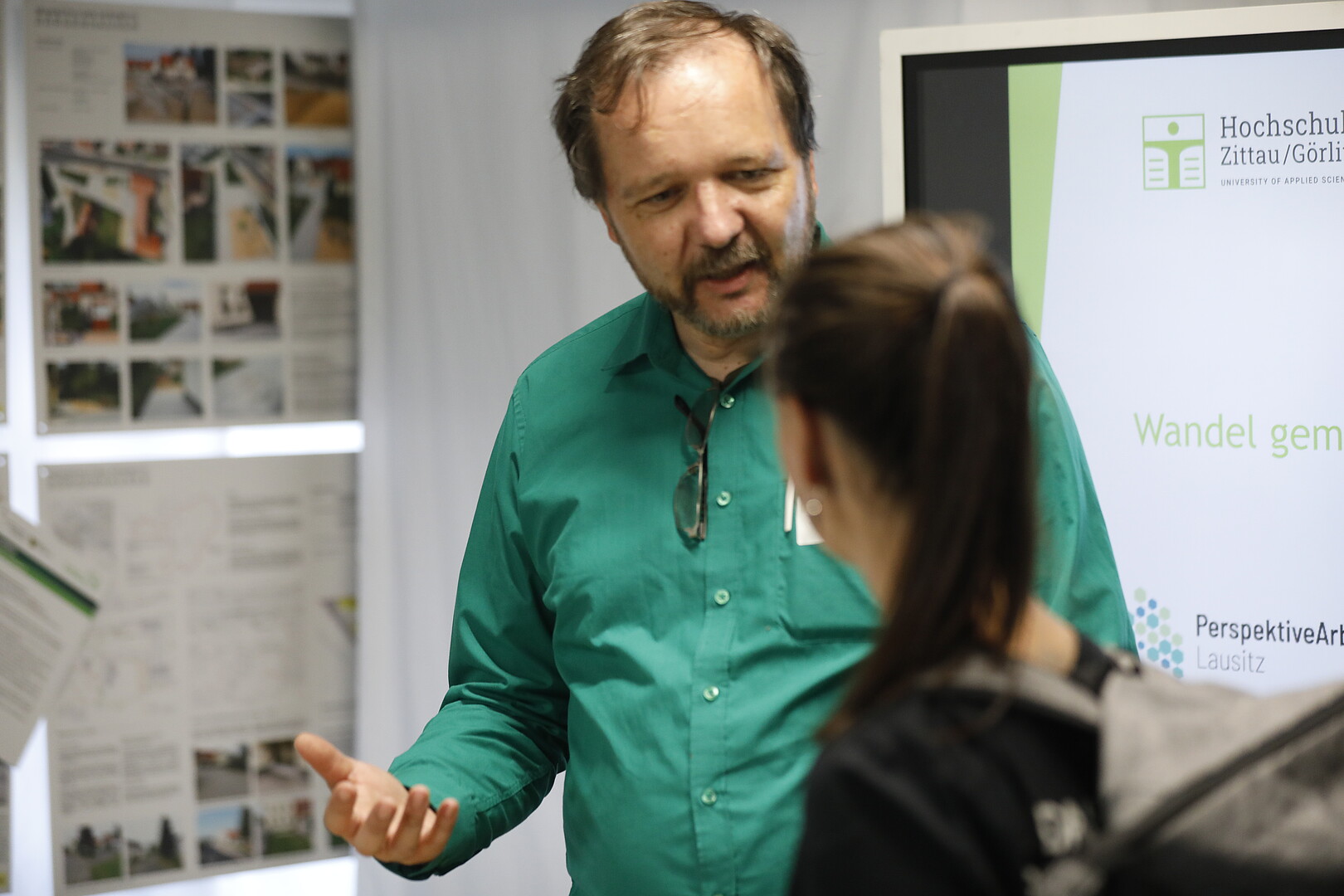
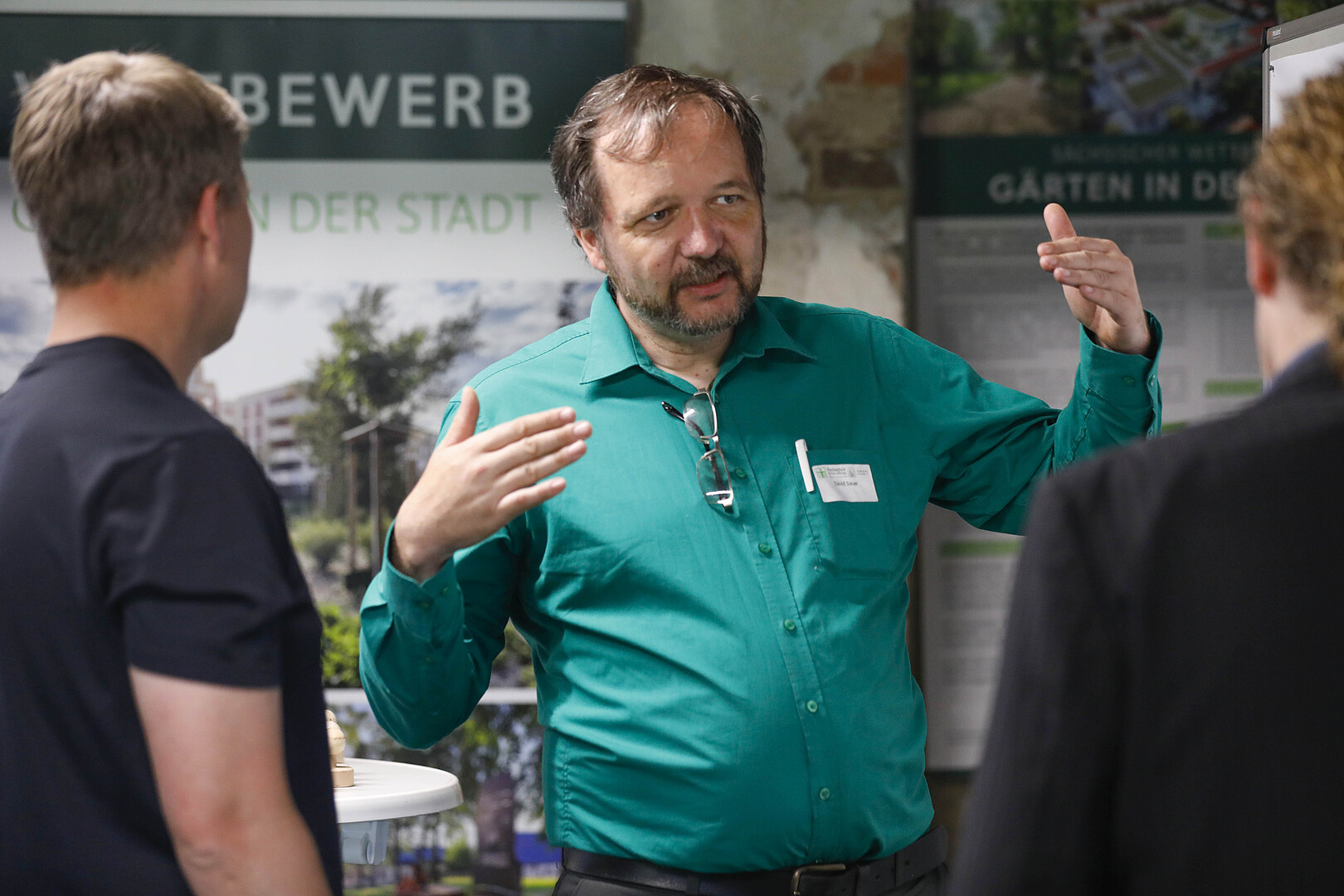
![[Translate to Englisch:] 2 Besucher im Gespräch mit David Sauer](/fileadmin/_processed_/f/4/csm__00A8503_15f2739c31.jpg)
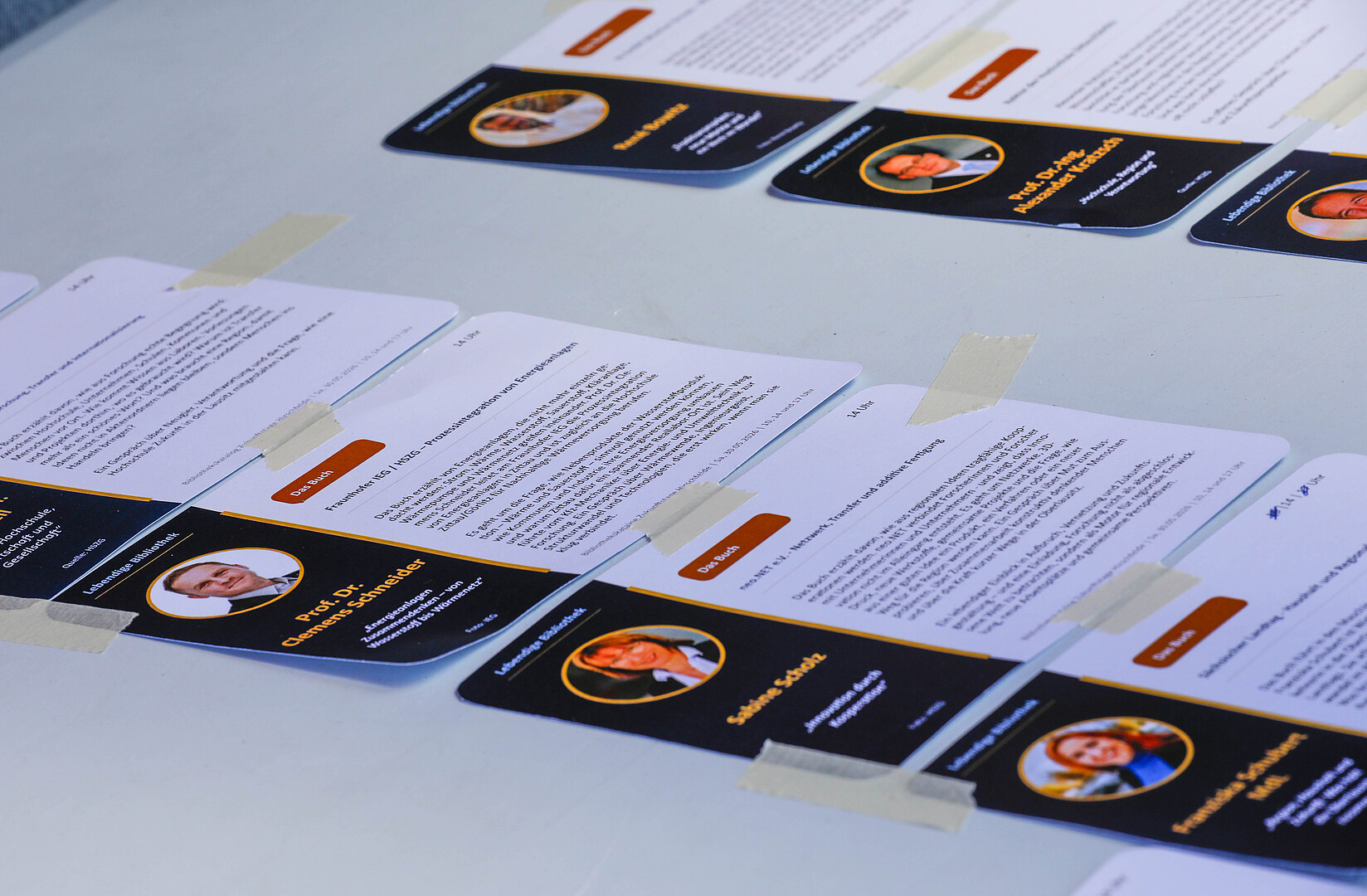
As part of the “Living Library” initiative, two “living books” from the GAT Institute were on hand. Those interested could “borrow” Maria Fabisch for a personal conversation about technology in care and in later life. With David Sauer, on the other hand, visitors could discuss change processes within organisations. The format thus offered visitors a particularly accessible opportunity for professional exchange on a wide range of topics.
![[Translate to Englisch:] Besucherin im Alterssimulationsanzug](/fileadmin/_processed_/3/4/csm_IMG_9953_485e87b3f9.jpeg)
![[Translate to Englisch:] Alterssimulation ausgbreitet auf einer Bank](/fileadmin/_processed_/2/a/csm_IMG_9970_7acfe5df9a.jpeg)
2.Obergeschoss
1. Obergeschoss