

Message details
Women's power in research: TRAWOS female scientists in focus
February 11 is International Day of Women and Girls in Science. TRAWOS researchers talk about their scientific careers.
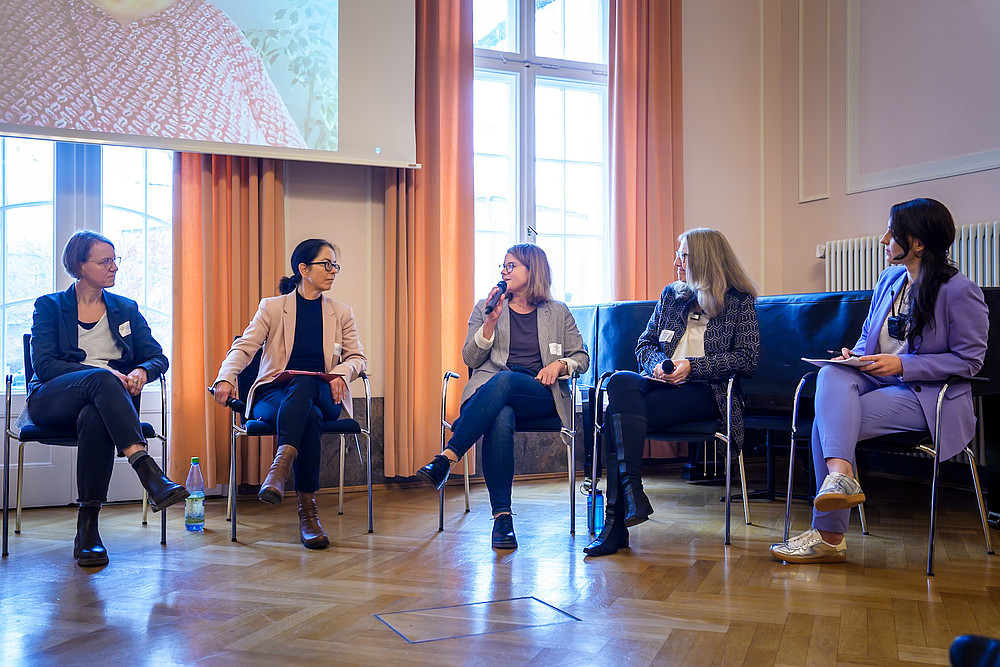
February 11 is International Day of Women and Girls in Science. This day of action, launched by the United Nations, aims to draw attention to the unequal representation of women in research worldwide and calls for greater equality of opportunity, particularly in the natural sciences and engineering.
The significance of the day for TRAWOS
According to UNESCO, less than 30% of researchers worldwide are women; at TRAWOS, however, they are in the majority. On today's day of action in particular, we want to raise the profile of girls and women in science. Female scientists at TRAWOS reflect on why they chose a career in science and what they hope for the future of their research.
Challenges and progress
Despite some progress, there are still structural barriers that prevent women from gaining a foothold in science or taking advantage of career opportunities. These include:
- stereotypes and prejudices: Even in the early stages of education, girls are often discouraged from pursuing science subjects
- lack of role models: The lack of visible female role models in science and research can be discouraging
- little support for career and family: Women often face difficulties in balancing family and scientific careers.
More visibility and support
Today reminds us that gender equality is not only a matter of justice, but also of scientific excellence. Greater diversity in research leads to better results and innovative solutions to regional and global challenges.
Take a look at the TRAWOS brochure published in 2024 "10 Jahre Forschung zu Lebensweisen von Frauen in Strukturwandelregionen" (10 years of research into women's lifestyles in regions undergoing structural change)
“I find it particularly motivating to generate knowledge that, in the best case scenario, can serve as a basis for measures that make our society more equitable. I value the exchange with various stakeholders on equality and gender-related injustices because it broadens my own perspective and also provides food for thought for my counterparts.”
”"For the future I hope that hostility towards science will no longer be tolerated in society. As a gender studies scholar in particular, I still too often have to justify the legitimacy and robustness of my research. Too often my scientific expertise is dismissed as mere opinion and people outside my field believe they have the right to criticize my work without being asked. For all girls and FLINTA+ in science, I hope that their wealth of knowledge is appreciated, that their everyday work is free of sexism (and all other -isms) and that they receive all the resources they need to fully realize their potential and greatness."
”Prof. Monique Ritter, former employee at TRAWOS, expressed her wishes for the future of gender research in Saxony during an expert discussion at TU Dresden in November. For her, gender research is not feasible without a clear stance and values in higher education as it deals with human rights-based issues. TRAWOS has good connections in the Lausitz region and good cooperation between employees who conduct research on gender issues. Prof. Ritter would like to see this good networking and cooperation between universities and universities of applied sciences in Saxony. She also emphasizes the importance of intersectional perspectives in Saxon gender studies, which she believes should be given greater focus.
Your contact persons at Trawos
2, Obergeschoss

2.Obergeschoss